
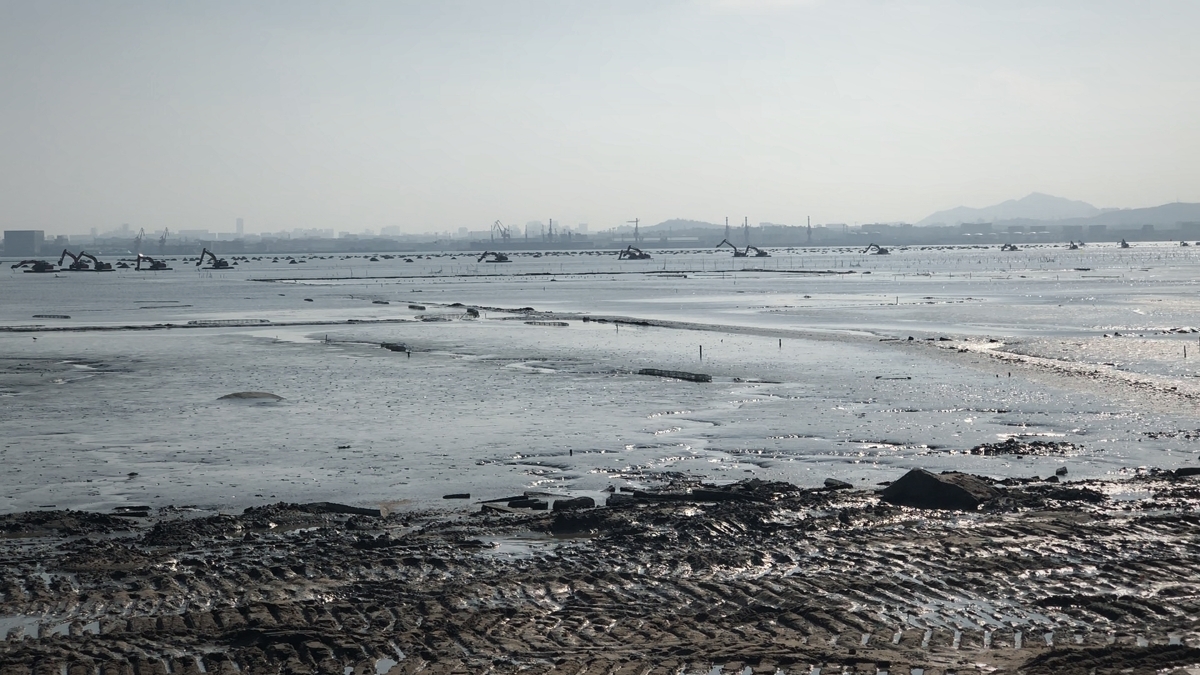
At the edge of vast farmland, a 50-hectare swampland lay dormant for decades—overgrown with weeds, waterlogged, and virtually unusable for agriculture. However, everything changed last fall when an agricultural company introduced two amphibious excavators, launching a miraculous transformation to turn “mire into farmland.”
Challenge: Deep Swamp, Traditional Machinery Struggles
The swamp had an average water depth of 1.5 meters, with a soft substrate of clay and humus. Traditional excavators would easily sink, while manual dredging was costly and slow. At the project’s outset, the team attempted to use standard excavators with steel plates for support, but progress was less than 100 meters per day, putting immense pressure on the schedule.
Turning Point: Amphibious Excavators Play a Key Role
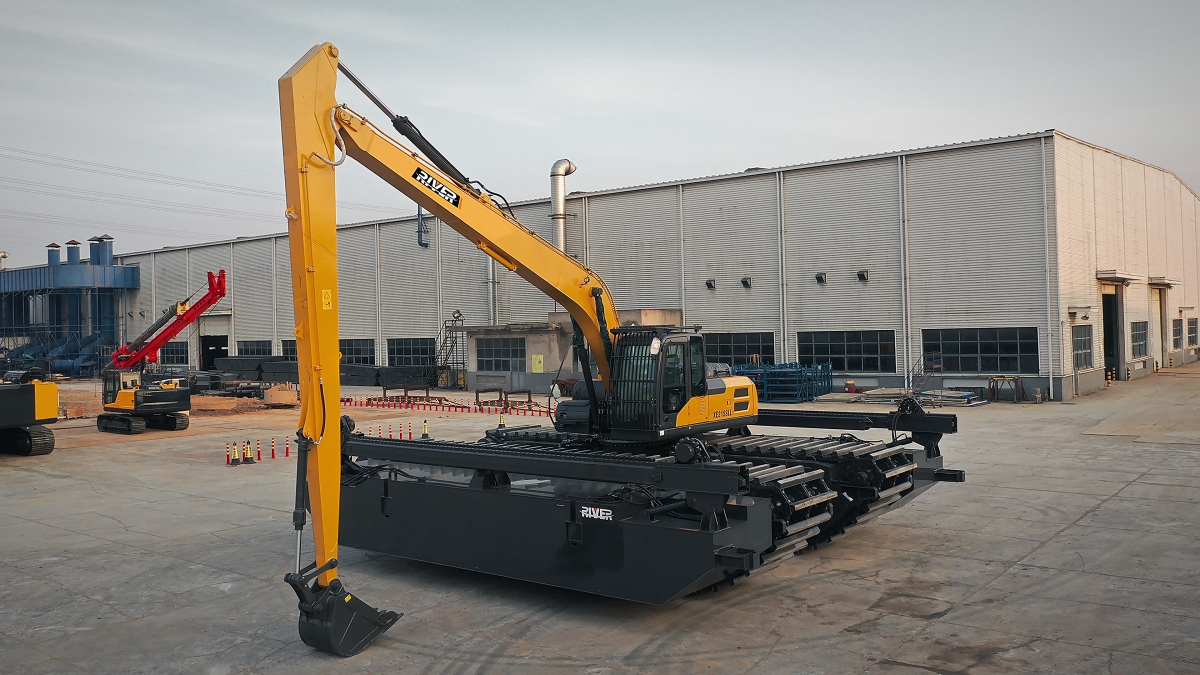
The company ultimately deployed two “Swamp Warrior” series amphibious excavators. These machines feature extra-wide tracks with a ground pressure below 28 kPa, allowing them to operate freely in swamps with water depths up to 2 meters. Their key advantages include:
*Buoyancy Design: Sealed pontoon structures enable semi-floating operation on water.
*Versatile Attachments: Equipped with wide buckets, dredging buckets, and rippers for integrated excavation, dredging, and leveling.
*Long-Reach Capability: A 15-meter extended arm allows “remote dredging” of distant swamp areas from stable ground.
Construction Record: Three-Phase Swampland Transformation
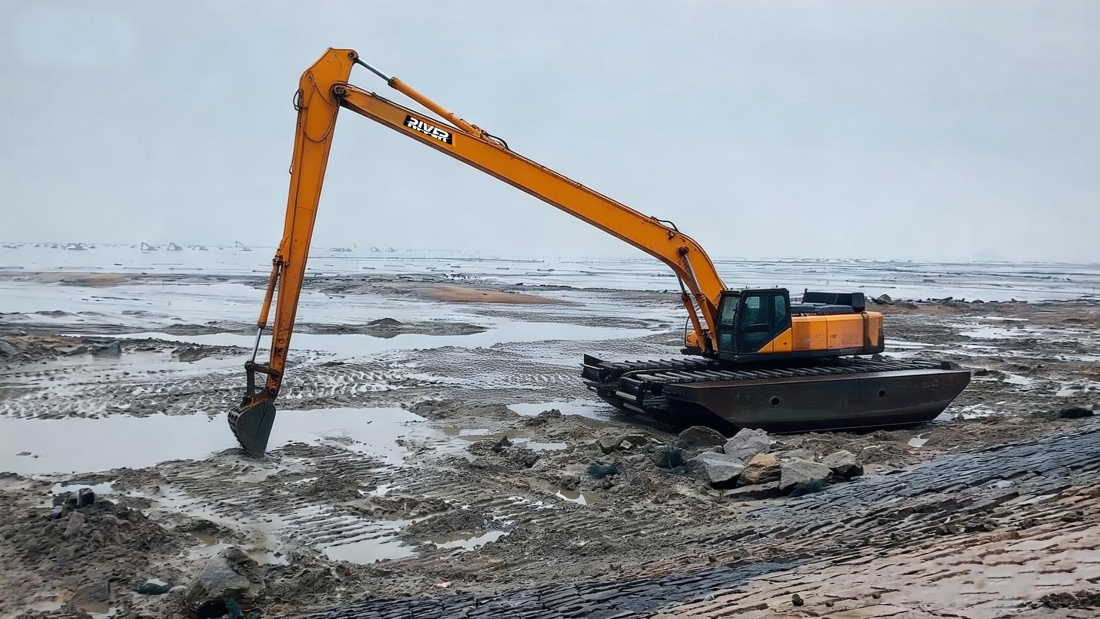
The first phase focused on drainage and dredging. The amphibious excavators dug main ditches along pre-planned drainage routes, with wide buckets removing 1.2 cubic meters of silt per cycle and advancing 500 meters daily. Combined with slurry pumps, field-wide water drainage was completed in two weeks.
The second phase involved soil improvement. The excavators switched to rippers to deeply loosen the compacted subsoil, then incorporated straw and fertilizer transported to the field edges. The machines’ zero-radius turning function prevented re-compaction of treated areas.
The third phase was field shaping. As the water was drained, the amphibious excavators continued with soil tillage, precisely excavating irrigation channels and building ridges, dividing the swamp into regular grid fields. The excavators then used the buckets to loosen the deep layers of soil, improving its aeration and helping to create a more level surface.
Results: New Farmland, Ecological and Economic Wins
After two months of construction, the 50-hectare swampland was transformed into high-standard paddy fields. Rice trial planting the following spring yielded an average of 580 kg per mu. The project also unexpectedly improved the local microclimate—the new farmland formed a wetland buffer zone, attracting birds like egrets.
Insight: Specialized Machinery Enables Land Revitalization
Project lead Engineer Li summarized: “The swamp mobility, deep-water operation stability, and multi-attachment compatibility of the amphibious excavators were key to the project’s success. Such machinery will play an even greater role in future coastal development, river regulation, and similar fields.”
Today, the once-barren mire is rolling with rice waves. The amphibious excavators have left behind not only fertile farmland but also a vivid example of sustainable land resource utilization.
This version highlights both the technological advancements of amphibious excavators and the practical, real-world impact of their application. It blends the key features and benefits of the machinery with detailed descriptions of the project phases, ensuring that the content resonates with agricultural and construction professionals alike.