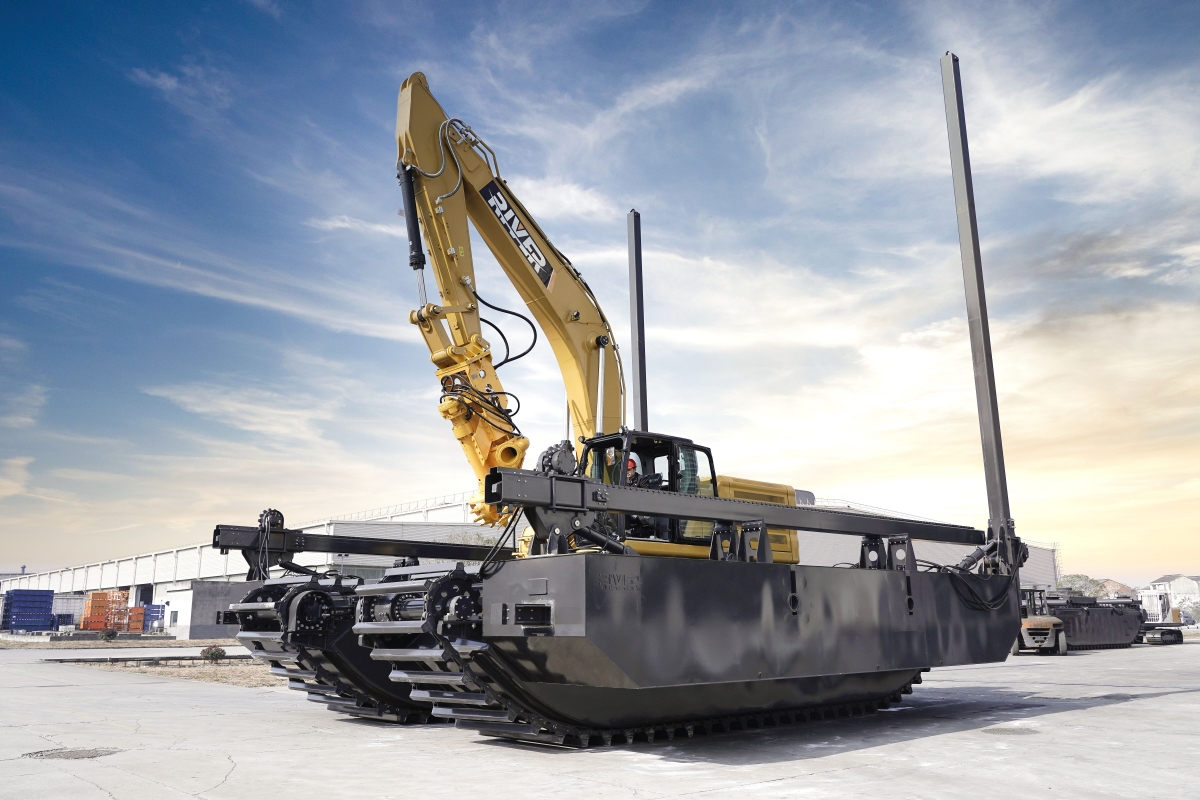
In special work situations like water projects, swamp dredging, and tidal-flat development, amphibious excavators are essential. Their pontoon undercarriage and high flexibility make them very useful.
However, because they are very complex and expensive, picking the wrong model can lead to costly mistakes. You need to understand the key parameters and common errors to avoid this.
This guide summarizes five essential parameters and three major pitfalls to help you make a well-informed decision.
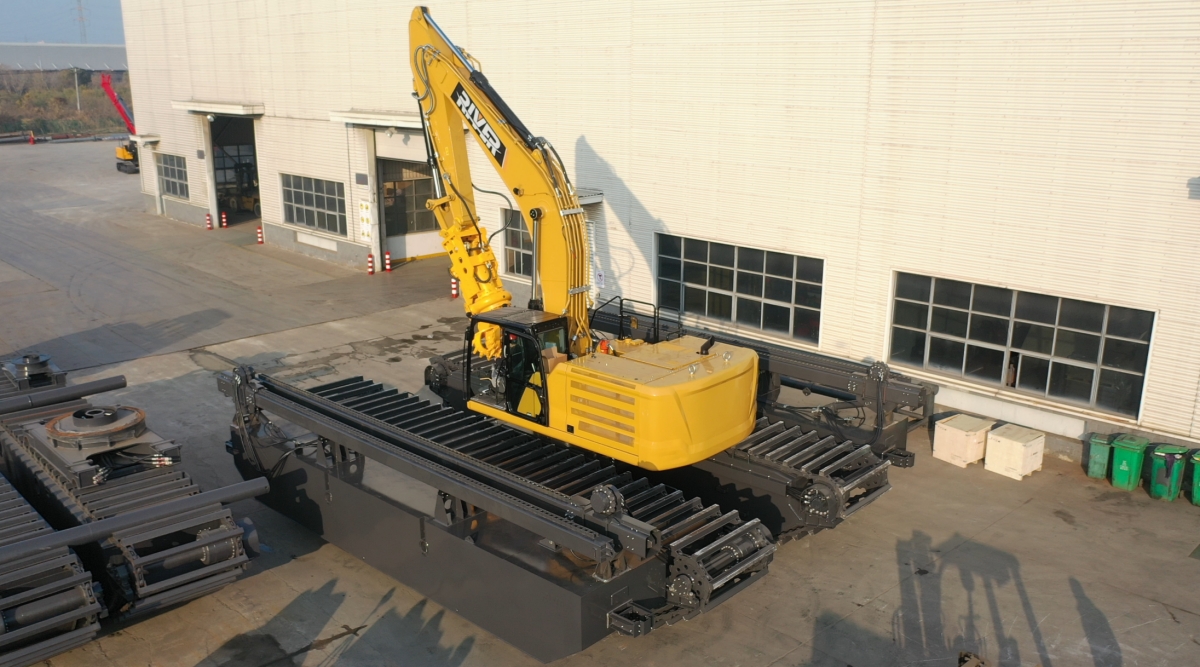
Five Key Parameters
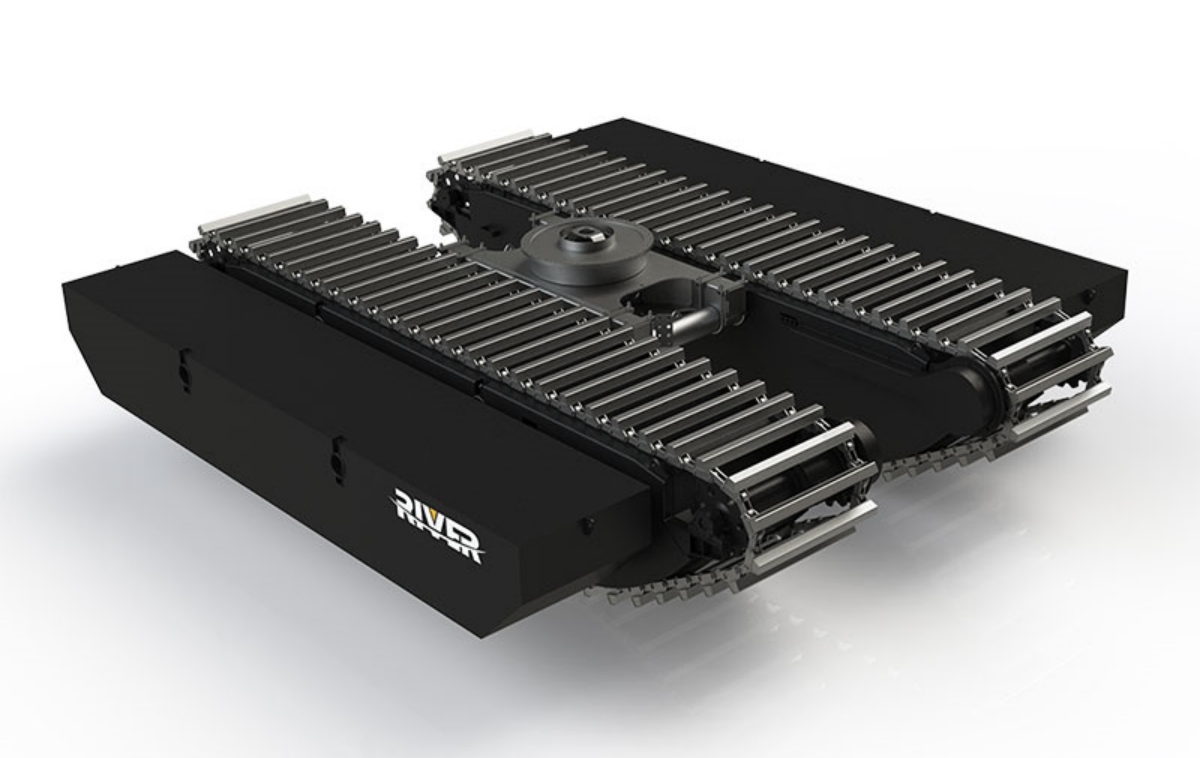
1. Pontoon size and buoyancy
The pontoon is the core structure of an amphibious excavator and directly determines its stability and mobility on water.
When choosing a machine, make sure the pontoon size and buoyancy fit the needed water depth and mud thickness.
In general, a larger pontoon area and better sealing performance provide stronger adaptability in deep water and soft ground.
2. Weight-to-buoyancy ratio
The matching level between total machine weight and buoyancy is a critical indicator of overall safety.
A properly designed ratio ensures higher operating stability and stronger resistance to side tilting during water operations.
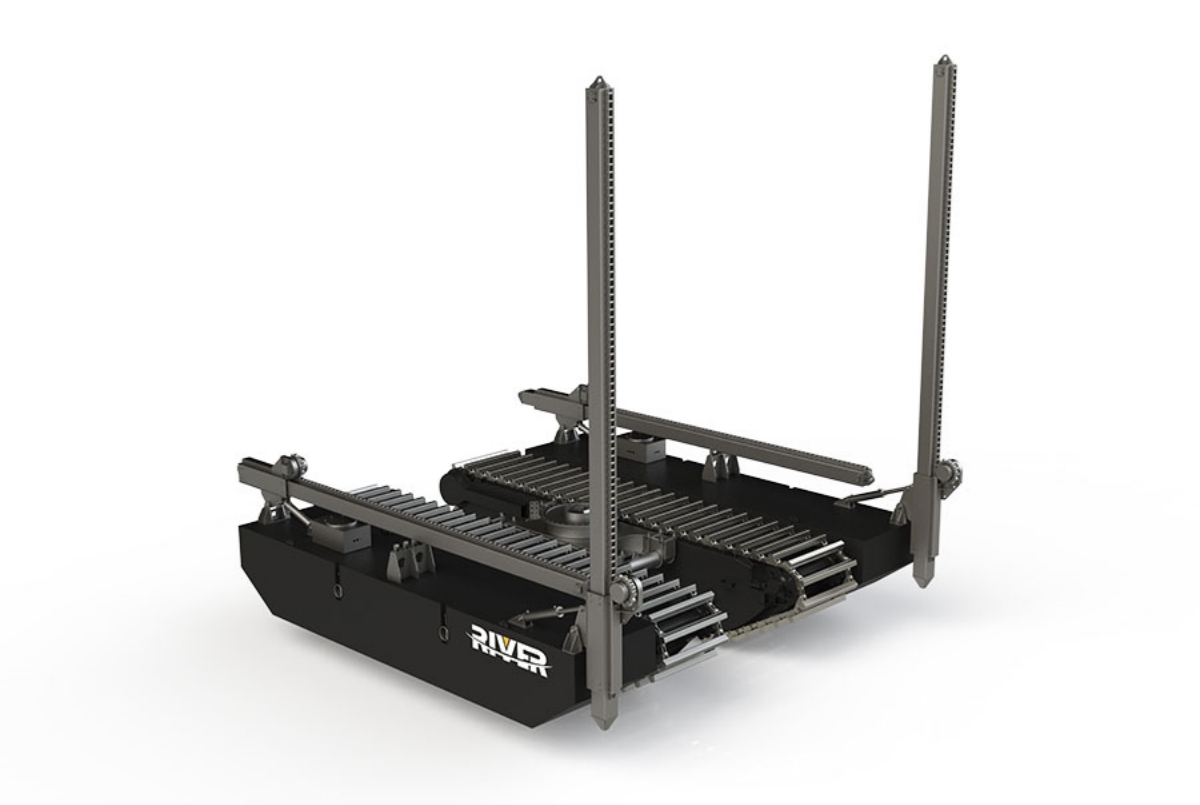
3. Spud positioning system
The hydraulic lifting spud system directly affects working stability on water.
Key points include the spud length, diameter, and wall thickness. They also include the capacity of the lifting motors and hydraulic cylinders.
4. Travel and propulsion system
The crawler travel motors and propeller propulsion system determine the machine’s mobility on water and in shallow areas.
Stable and reliable travel and propulsion systems are essential for continuous and efficient operation.
5. Maintenance and parts commonality
Check if daily maintenance points, like lubrication and filter replacement, are easy to reach. Also, check if critical spare parts work with standard land-based excavator models.
This significantly reduces downtime and long-term maintenance costs.
Three Common Pitfalls to Avoid
Pitfall 1: Focusing only on low price and ignoring real working conditions
Amphibious excavators are normally more expensive than standard machines.
Unusually low prices often indicate compromises in pontoon materials, sealing processes, or engine waterproof protection.
Always choose a model with the right protection levels for the environment. This includes saline water or long-term immersion. Doing so will help prevent project delays from equipment failures.
Pitfall 2: Ignoring after-sales service and technical support
Specialized machines require faster and more professional after-sales support.
Before purchasing, confirm whether the supplier provides professional training, local technical support, and timely spare-parts supply.
It is best to choose brands that have a good reputation and a strong service network.
Pitfall 3: Purchasing without on-site testing or condition verification
Buying only based on specifications and promotional materials involves risk.
If it is possible, you can require on-site testing. This testing should happen under similar working conditions. It will help evaluate stability on water and soft mud, swing balance, and real excavation efficiency.
At the same time, review feedback from existing users to understand common issues in long-term operation.
Conclusion
An amphibious excavator is a major investment. A rational and well-informed selection not only improves construction efficiency but also significantly reduces operational risks.
By focusing on five key factors and avoiding three common mistakes, you can choose the right machine for your project. Keep your requirements and budget in mind as you make your decision.
If you need more information about specific models or technical solutions, please contact us for personalized recommendations: www.riverexcavator.net .