1. Introduction
As dredging and land development projects continue to expand into coastal and shallow sea areas, the requirements for equipment are becoming more demanding. In these environments, an amphibious excavator must not only dig efficiently but also move safely and remain stable in water. This is especially important when the working area is wide and the water depth is relatively high.
In recent projects, a new solution has been applied: adding a self-propelled propeller system to the excavator undercarriage. This upgrade allows the machine to move actively in water instead of relying only on tracks. In one shallow sea dredging project, this solution showed clear improvements in efficiency, control, and safety compared with traditional configurations.
2. Customized Undercarriage Solution for Deep Water Projects
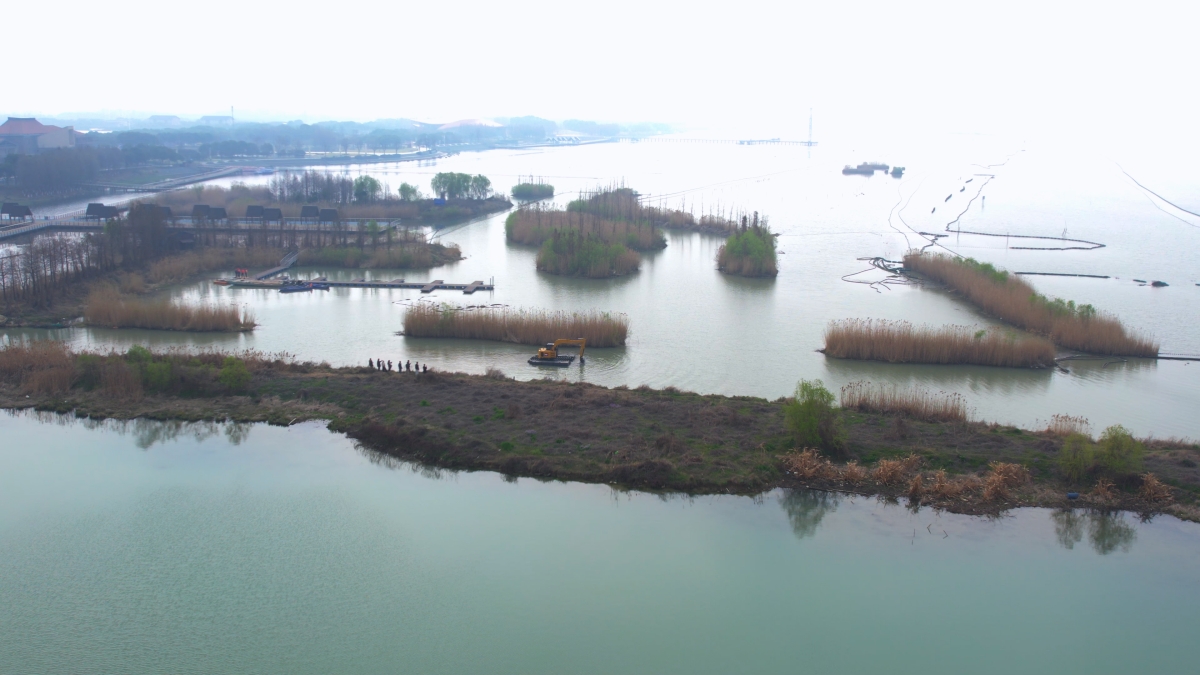
The project took place in a shallow coastal area with a large working range and relatively deep water. The main task was to remove sediment from the seabed to maintain water flow and improve the environment. Because the working area was wide, the excavator needed to move frequently between different points. At the same time, stable operation during digging was very important.
A standard amphibious excavator undercarriage is designed with pontoons and relies on tracks to move through water. This design works well in wetlands, swamps, and very shallow water. However, in deeper and more open water, several problems appear.
When the excavator is digging underwater, the resistance from mud and sand can affect the balance of the machine. The body may sway or tilt slightly, which makes operation less precise and may increase safety risks. In some cases, if the ground is too soft or the water is too deep, there is even a risk of partial sinking.
Another limitation is movement. Traditional undercarriages move by “paddling” with tracks. This method is slow and not very efficient in open water. It is also difficult to control direction accurately, especially when the operator needs to adjust position frequently. These issues can reduce overall working efficiency and increase operation time.
To solve these problems, RIVER designed a customized undercarriage equipped with a self-propelled propeller system. With this design, the excavator no longer depends only on tracks for movement. The propeller provides additional power, allowing the machine to move forward, backward, and turn more smoothly in water.
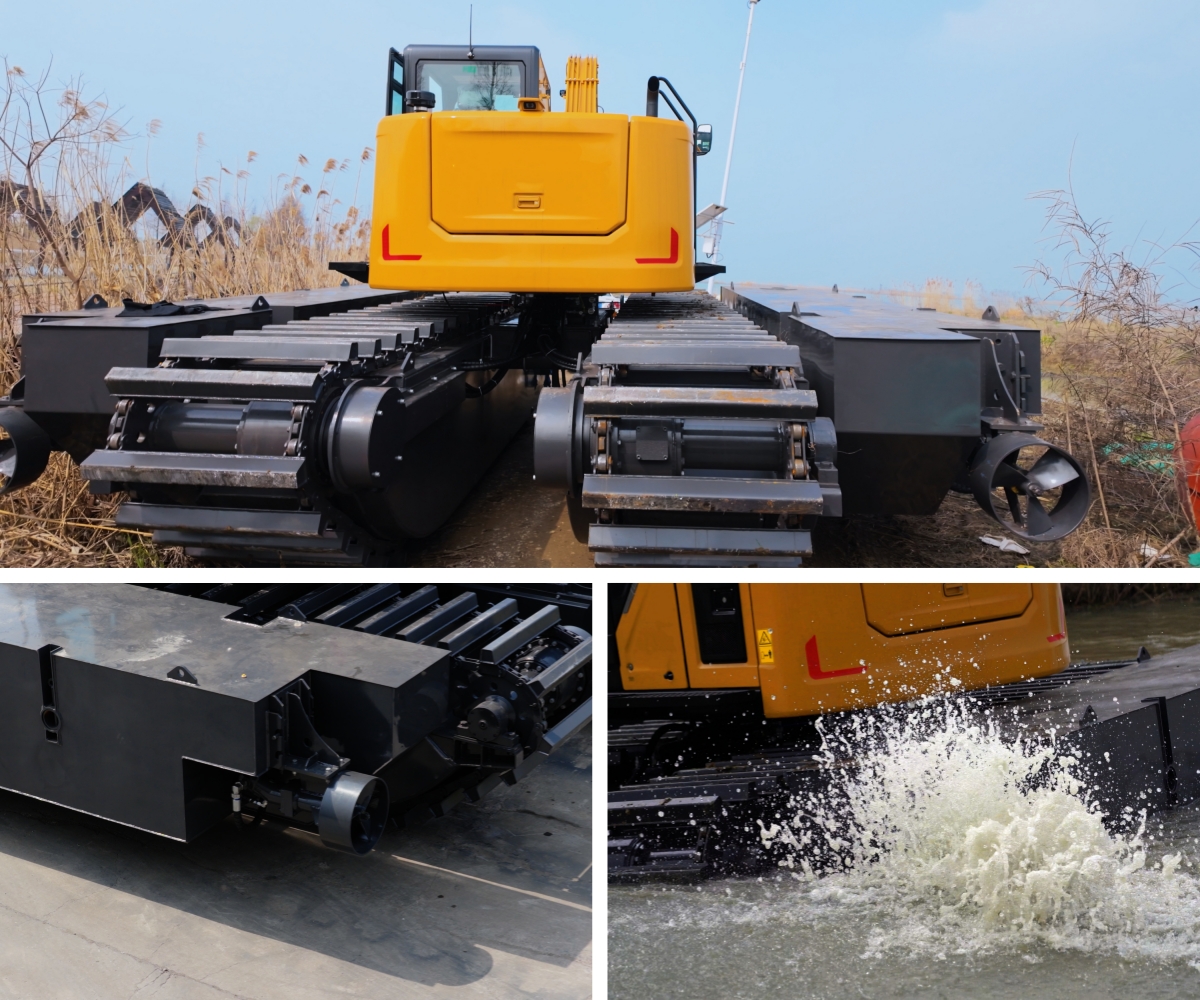
In the actual project, this undercarriage was used together with an XCMG excavator. After the upgrade, the machine could travel faster between working points, which reduced idle time and improved efficiency. The operator could also control the direction more easily, making positioning more accurate.
More importantly, the overall stability of the machine was improved. During digging, the excavator remained more balanced, even when facing strong resistance from sediment. This allowed the operator to work with more confidence and reduced the risk of accidents. As a result, both productivity and safety were improved in the project.
3. Comparison with Standard Amphibious Undercarriage
The difference between a traditional undercarriage and one with a self-propelled propeller is clear when working in deep water. A standard system mainly floats and moves slowly using tracks, while the upgraded system can actively navigate like a small vessel.
In terms of movement, the propeller system provides higher speed and smoother travel. The excavator can reach different working areas faster, which is very useful in large projects. In terms of control, direction adjustment becomes easier and more precise, helping the operator complete tasks more efficiently.
Stability is another key advantage. With better balance, the machine is less affected by external forces during digging. This leads to more consistent performance and reduces unnecessary movement. As a result, the amphibious excavator can work more steadily and safely in challenging conditions.
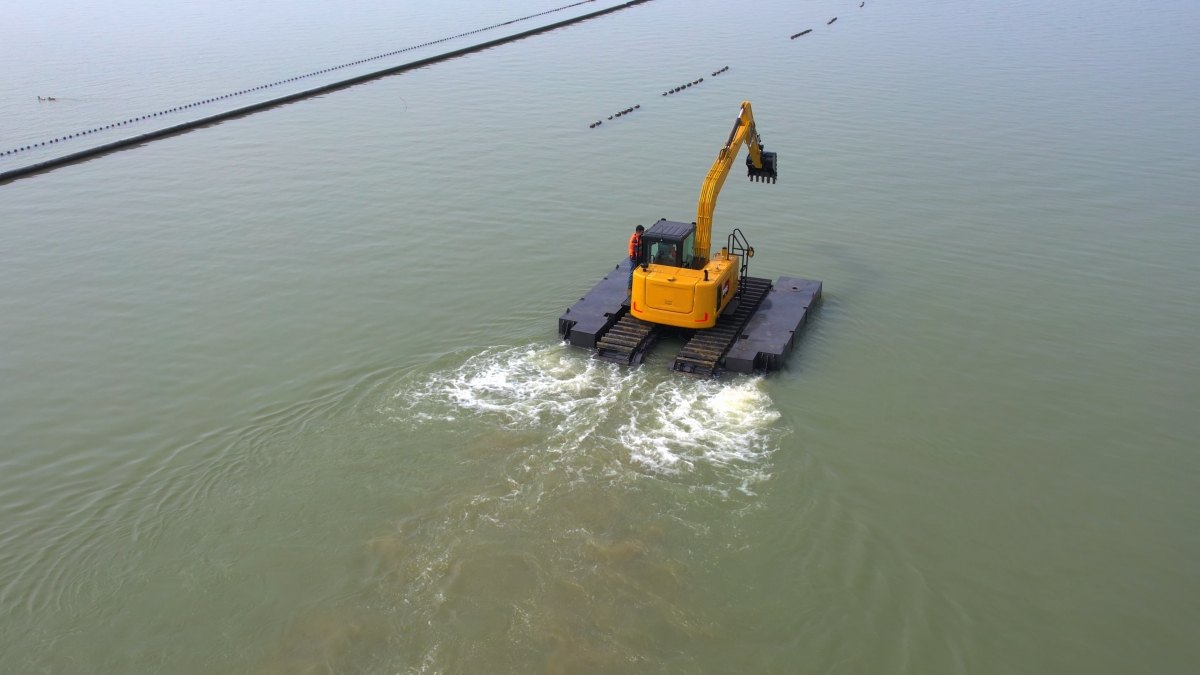
Overall, the propeller system improves not only speed but also control and safety. These improvements directly increase working efficiency and reduce project risks.
4. Conclusion
For dredging projects in deeper or more open water, choosing the right equipment configuration is very important. A traditional amphibious excavator undercarriage may not always meet the requirements of such conditions.
By adding a self-propelled propeller, the excavator gains better mobility, improved stability, and more precise control. This makes it more suitable for marine and coastal projects where efficiency and safety are critical.
From a practical point of view, this solution helps contractors complete projects faster and with less risk. As working environments become more complex, upgrading the undercarriage system is becoming an effective way to improve overall performance.