I. Industry Pain Points & Solution Breakthrough
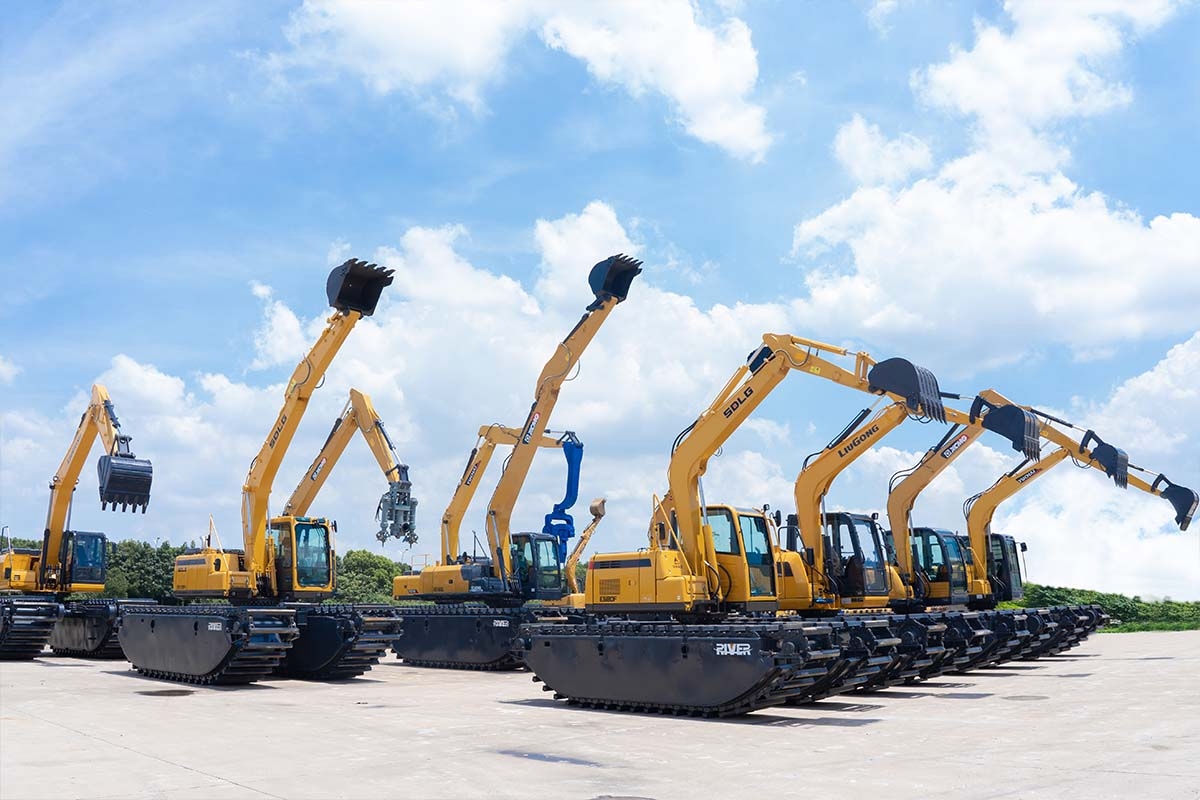
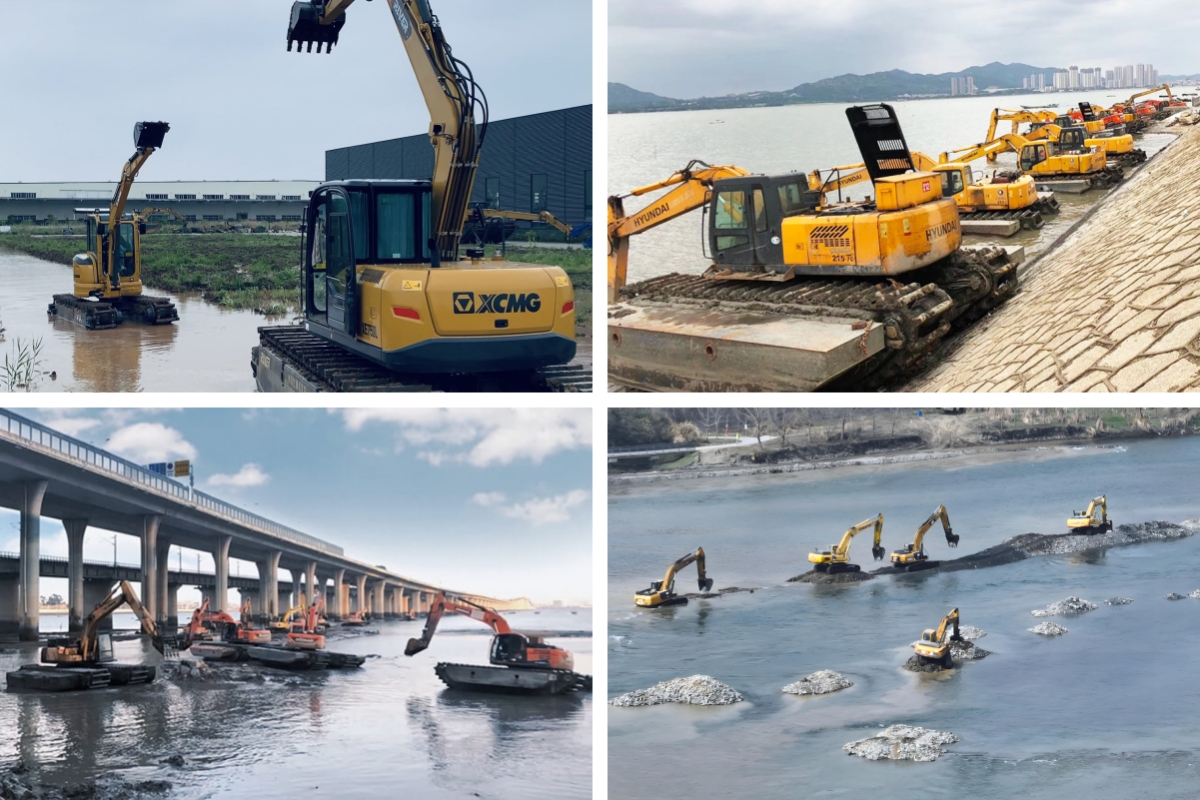
Port dredging, a core link in maritime infrastructure, has long been plagued by inefficiencies in traditional operations: separate excavation and leveling equipment lead to prolonged coordination gaps, repeated mobilization increases costs, and fragmented construction results in inconsistent base flatness. To address these challenges, the amphibious dual-function excavator (alternatively named terrestrial-aquatic all-terrain excavator, floating dredger, or swamp work platform) pioneers a “one-machine integrated closed-loop” solution. By integrating silt bucket deep excavation with rake bucket precision leveling, it eliminates equipment handovers and streamlines the workflow, achieving a leap from “segmented operation” to “seamless intelligent construction.”
II. Integrated Operation Framework: Two-Core Stages & Full-Cycle Synergy
The solution’s core lies in the organic connection between two professional stages, supported by intelligent technology, forming a self-sufficient operation cycle that covers “preparation → excavation → transportation → leveling → acceptance.”
Stage 1: Silt Bucket Deep Excavation – High-Efficiency Foundation Construction
Mission Definition: Rapid clearance of bulk sediment, silt deposits, and soft impediments in port waterbeds, ensuring controlled excavation scope and depth to lay a solid foundation for subsequent precision leveling.
Equipment Synergy Configuration:
- Main Unit: High-torque amphibious excavator equipped with anti-corrosion buoyancy track systems. This design reduces ground pressure to ≤0.3MPa (a critical advantage of floating dredgers), enabling stable operation in 0.3-4m shallow waters, mudflats, and silty terrains without damaging the underlying ecosystem.
- Working Attachment: Heavy-duty silt bucket with wear-resistant alloy teeth and reinforced bucket lips, enhancing penetration into compact sediment layers.
Intelligent Operation Process:
- Pre-Construction Calibration: Use 3D terrain scanning to map the waterbed, dividing the area into grid-based work zones to avoid missing or over-excavation.
- Stable Positioning: The amphibious excavator anchors itself via adjustable buoyancy modules, maintaining horizontal stability even in mild water flow.
- Cyclic Excavation: Execute the “scan-dig-lift-swing-dump” intelligent cycle – the bucket automatically adjusts digging angle based on real-time sediment hardness data, lifting silt at a constant speed to minimize water disturbance.
- Direct Material Transfer: Dredged material is loaded directly onto transport barges or onshore vehicles through precise boom control, reducing secondary handling losses by 25%.
- Depth Control: Pre-set excavation depth via the on-board system, reserving 15-30cm (adjustable based on sediment compressibility) for precision leveling, with real-time depth feedback to avoid under-digging.
Stage 2: Rake Bucket Precision Leveling – High-Standard Base Finishing
Mission Definition: Calibrate the excavated waterbed to meet design specifications for elevation (tolerance ±1.5cm), flatness, and slope, ensuring compatibility with subsequent wharf construction, pavement laying, or caisson installation.
Equipment Upgrade Configuration:
- Reused Main Unit: The same amphibious excavator, eliminating equipment relocation and reducing on-site mobilization time by 40%.
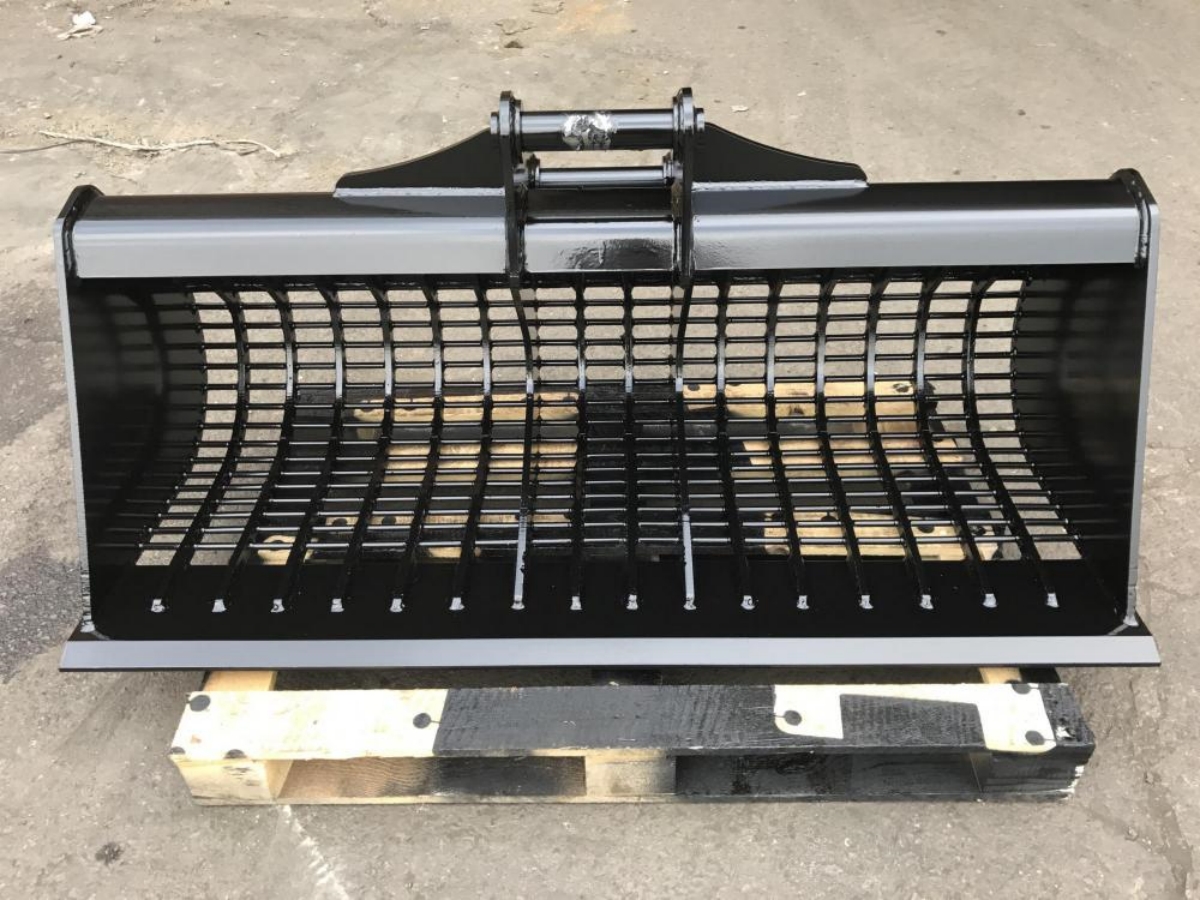
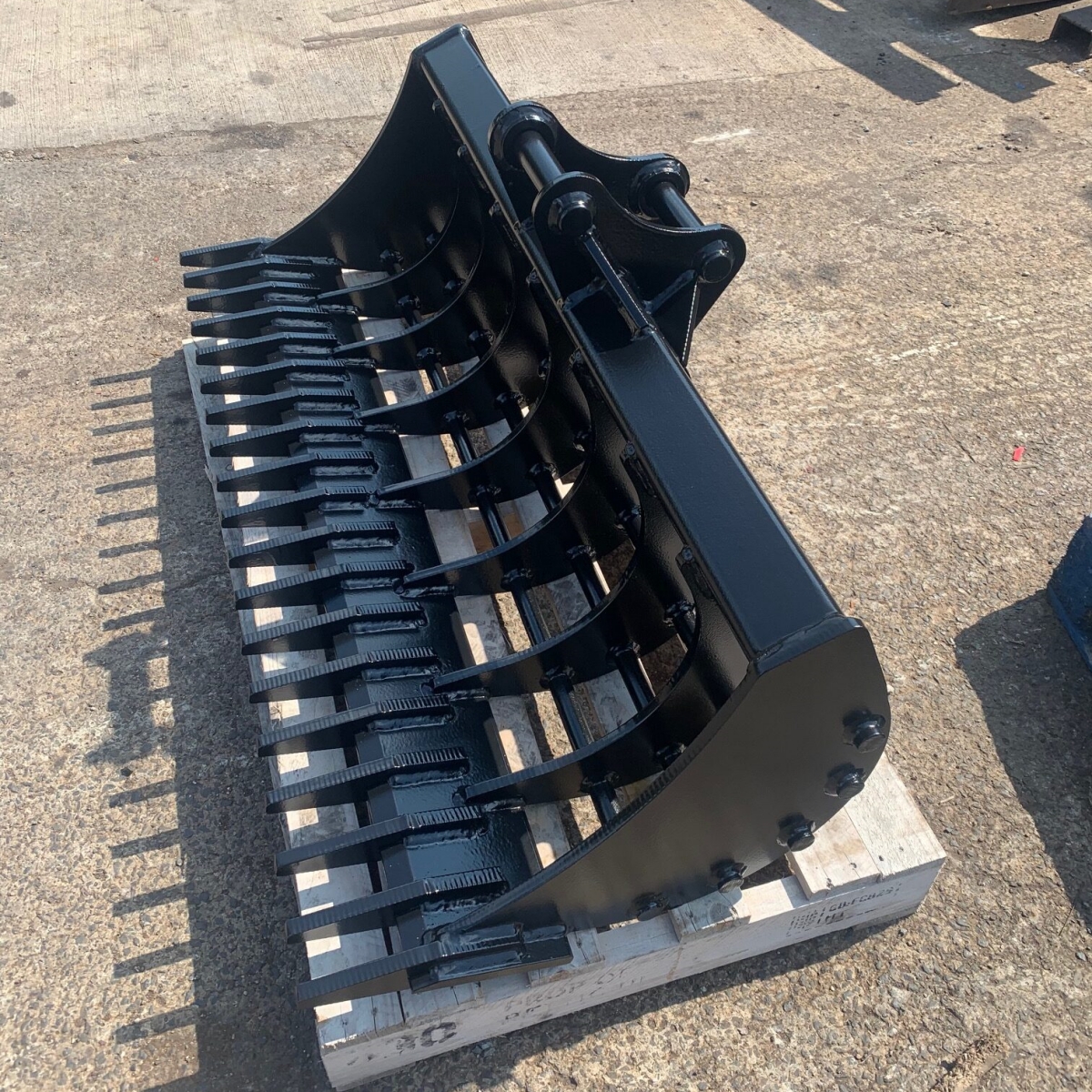
- Attachment Replacement: Swap the silt bucket for a hydraulic precision rake bucket (8-12 steel tines with adjustable spacing) via a quick-coupler system, enabling tool change in 2-3 minutes.
Precision Control Operation:
- System Synchronization: Activate the dual-mode guidance system to synchronize design elevation data with the excavator’s real-time position, displaying deviations on the cabin’s touchscreen.
- Combing & Leveling: The operator manipulates the rake bucket to perform transverse and longitudinal combing, using hydraulic micro-control technology to adjust tine opening (5-15cm) for uniform material distribution.
- Dynamic Adjustment: For high-lying areas, the rake bucket loosens excess sediment; for depressions, it transfers material via tine rotation, achieving “cut-high-fill-low” with millimetric precision.
- Compaction Enhancement: Multiple passes (2-3 cycles) with the rake bucket’s pressure-adjustable base plate compact the surface, improving soil bearing capacity.
- Quality Inspection: Integrate on-board laser flatness detectors to conduct real-time inspections, generating digital reports for immediate adjustments if deviations exceed tolerance.
Closed-Loop Formation: The entire process – “3D scanning → zone excavation → material transport → quick attachment change → precision leveling → digital inspection” – is completed by a single machine and operator team, forming an autonomous operation cycle that ensures consistent quality and efficient progress.
III. Core Technology Matrix: Empowering Precision & Adaptability
1. Rapid Attachment Switching Technology
High-strength hydraulic quick couplers with automatic locking function enable tool changes in 2-3 minutes, 3x faster than manual switching, ensuring workflow continuity.
2. Dual-Mode Precision Guidance System
GPS-RTK Positioning: Achieves planar positioning accuracy of ±2cm, ensuring the excavator operates within designated zones.
Ultrasonic Depth Measurement: Provides real-time waterbed depth data even in turbid water, complementing GPS for comprehensive elevation control.
Hydraulic Servo Control: Delivers stepless pressure adjustment for excavation and micro-flow control for leveling, balancing power and precision.
3. Amphibious Environmental Adaptation Technology
Buoyancy Track Design: Increases water displacement by 30% compared to traditional tracks, ensuring stability in deep mud.
Sealed Power System: IP67-rated engine and hydraulic compartments prevent water ingress, enabling long-term aquatic operation.
Low-Impact Operation: Low ground pressure minimizes damage to aquatic vegetation and sediment structure, aligning with green construction standards.
IV. Scenario-Specific Application Advantages
| Application Scenario | Core Advantages of amphibious Solution |
| Inland River Ports & Fishing Ports | Shallow-water adaptability (0.3m minimum depth) eliminates the need for dewatering; compact size fits narrow waterways. |
| Coastal Port Berths & Turning Basins | High-precision leveling meets heavy-duty wharf construction requirements; corrosion-resistant design withstands saltwater. |
| Lake/Reservoir Environmental Dredging | Low ecological impact (no temporary access roads) and precise sediment removal protect water quality. |
| Reclamation & Landfilling Base Preparation | Integrated excavation and leveling reduce construction cycles by 30%; compaction function improves base stability. |
V. Solution Value & Future Outlook
This integrated operation solution redefines port dredging by unifying “efficiency, cost, quality, and environmental friendliness.” Compared to traditional methods, it reduces equipment investment by 50%, shortens construction cycles by 30-40%, and improves base flatness by 60%, addressing the industry’s long-standing pain points.
Beyond immediate benefits, the solution embodies the trend of “intelligent aquatic engineering” – future upgrades will integrate AI-driven autonomous operation, 5G remote control, and digital twin management, further enhancing construction precision and safety. For ports of all sizes, especially those with limited budgets, tight schedules, or high environmental requirements, this amphibious excavator-based closed-loop solution is not just a construction tool, but a strategic choice for sustainable development.
As a versatile workhorse in aquatic civil engineering, the amphibious excavator (in its various forms: floating dredger, swamp work platform, dual-function excavator) continues to set new standards for port dredging, driving the industry toward a more efficient, precise, and eco-friendly future.