
Introduction
In modern construction and dredging, many projects take place in difficult environments. Deep water, soft ground, and long working distances make the job harder.
Standard excavators often struggle in these conditions. They cannot reach far enough and need frequent repositioning.
An extended arm offers a better solution. It increases reach, improves safety, and reduces downtime. A river extended arm is especially useful in amphibious excavation, where working conditions are more complex.
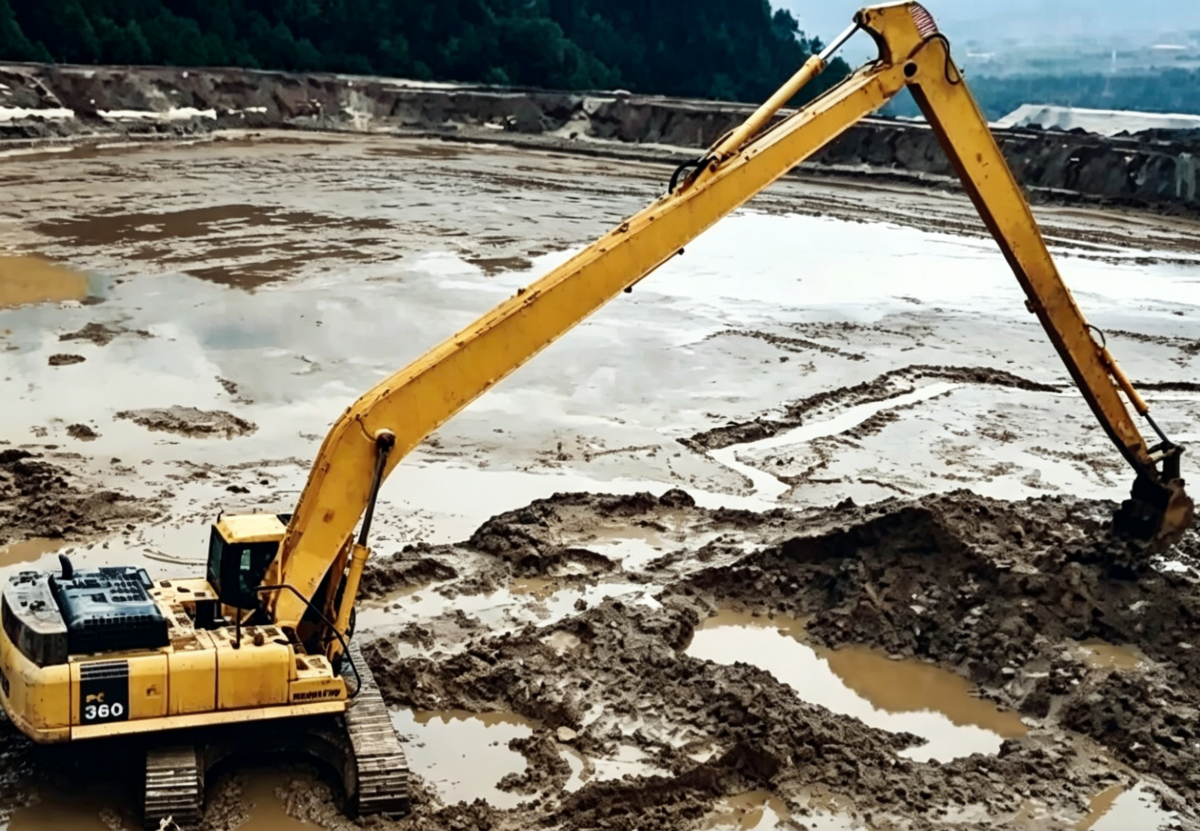
Limited Reach? A River Extended Arm Solves the Problem
Limited reach is one of the biggest problems in excavation work. Machines must move often, which slows progress and increases risk.
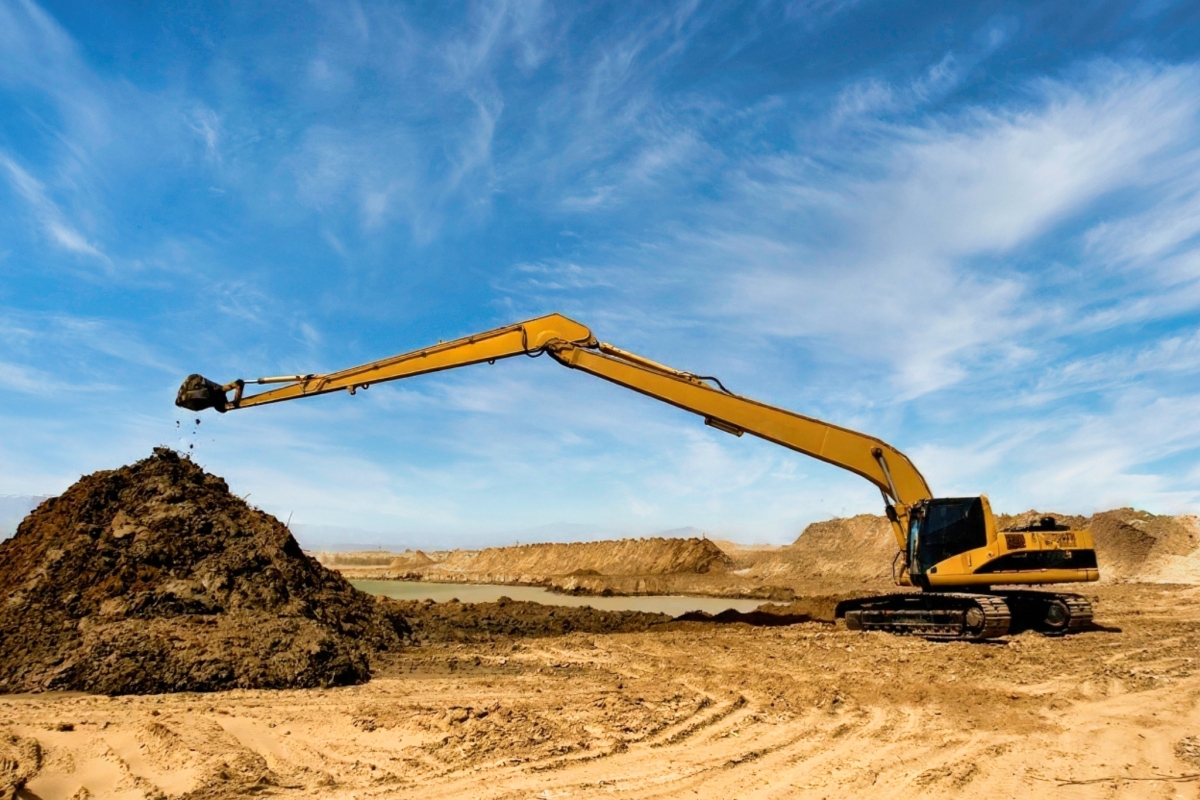
A long reach excavator solves this issue. With an extended arm, operators can work farther without moving the machine as often.
Extended Reach and Digging Depth
An extended arm increases both reach and depth. It allows operators to access areas that standard machines cannot reach. This is critical in river work and amphibious excavation, where distance and depth matter.
Reduced Machine Movement
A longer arm means a larger working range. The excavator can stay in one place and complete more tasks. This reduces fuel use, saves time, and improves efficiency.
Safer Working Distance
Safety is a key concern in water and soft ground conditions. With a river extended arm, operators can keep a safe distance from unstable areas. This reduces the risk of accidents and equipment damage.
Common Applications of a River Extended Arm
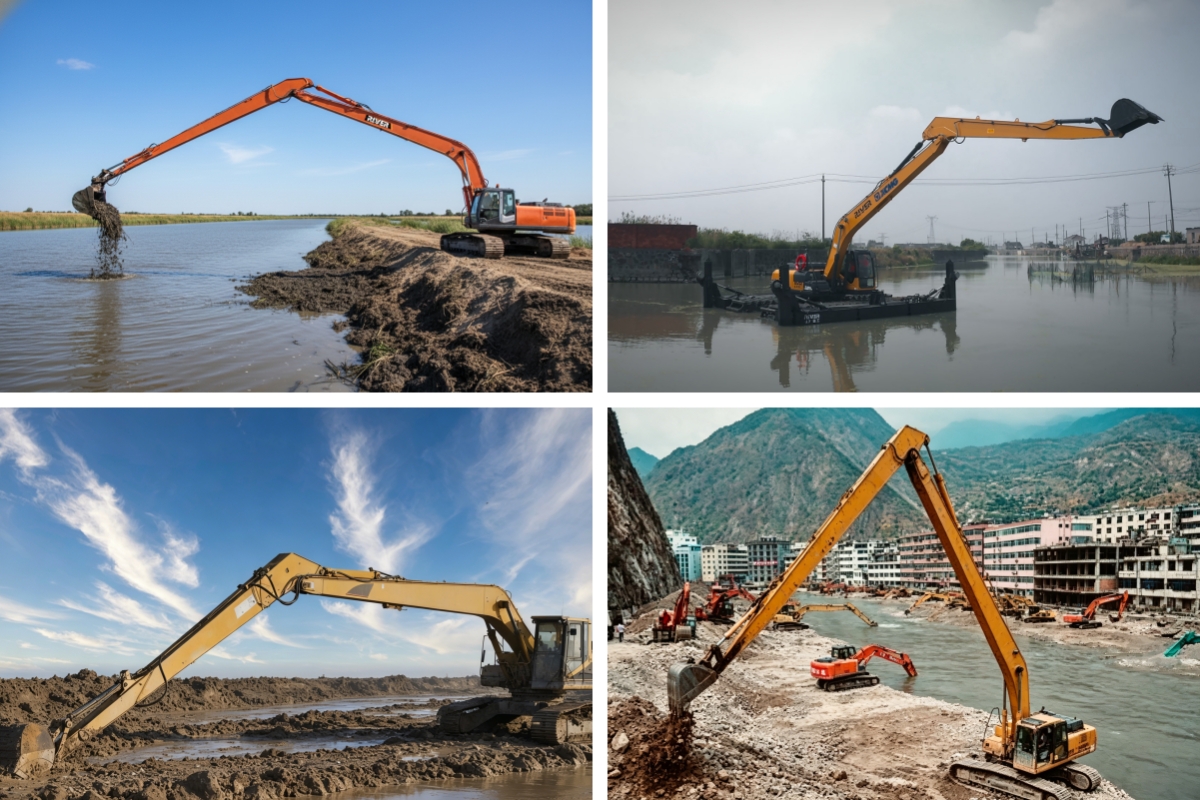
A long reach excavator is widely used in challenging environments where safety and efficiency are critical.
River Dredging
In river dredging, a long reach excavator can work from the bank or a barge. The river extended arm reaches the center of the channel. This reduces the need for temporary structures and lowers project costs.
Deep Water Slope Protection
In lakes and reservoirs, steep slopes can be dangerous. An extended arm allows operators to work from a safe distance. This improves both safety and accuracy.
Wetland and Soft Ground Work
In swampy or muddy areas, machines stay on stable ground. The extended arm handles long-distance excavation, reducing the risk of sinking.
Emergency Rescue and Recovery
In rescue operations, such as submerged vehicles or bridge incidents, the extended arm allows safe long-distance handling. This improves response speed and protects workers.
Frequently Asked Questions
How deep can an extended arm excavate?
The digging depth depends on arm length, machine size, and working angle. A 20-meter extended arm can usually reach 15–18 meters under normal conditions.
Do I need additional counterweight?
Yes. A longer arm increases front load. Extra counterweight is needed to keep the machine stable.
Is it safe to work at maximum reach?
Yes, if used correctly. Always follow load charts and avoid side digging at full extension.
Can extended arms fit different excavator brands?
Yes, but customization is required. Key factors include mounting size, hydraulic system, and joint design.