
Introduction
The rainy season often brings delays, rising costs, and heightened safety concerns in construction, emergency rescue, and river management. Traditional machinery struggles with mud, water accumulation, and soft ground. However, the Amphibious Excavator has revolutionized this landscape, enabling continuous work and effective emergency response even during the wet season!
Advantage 1: Exceptional Mobility, Conquering Complex Terrain
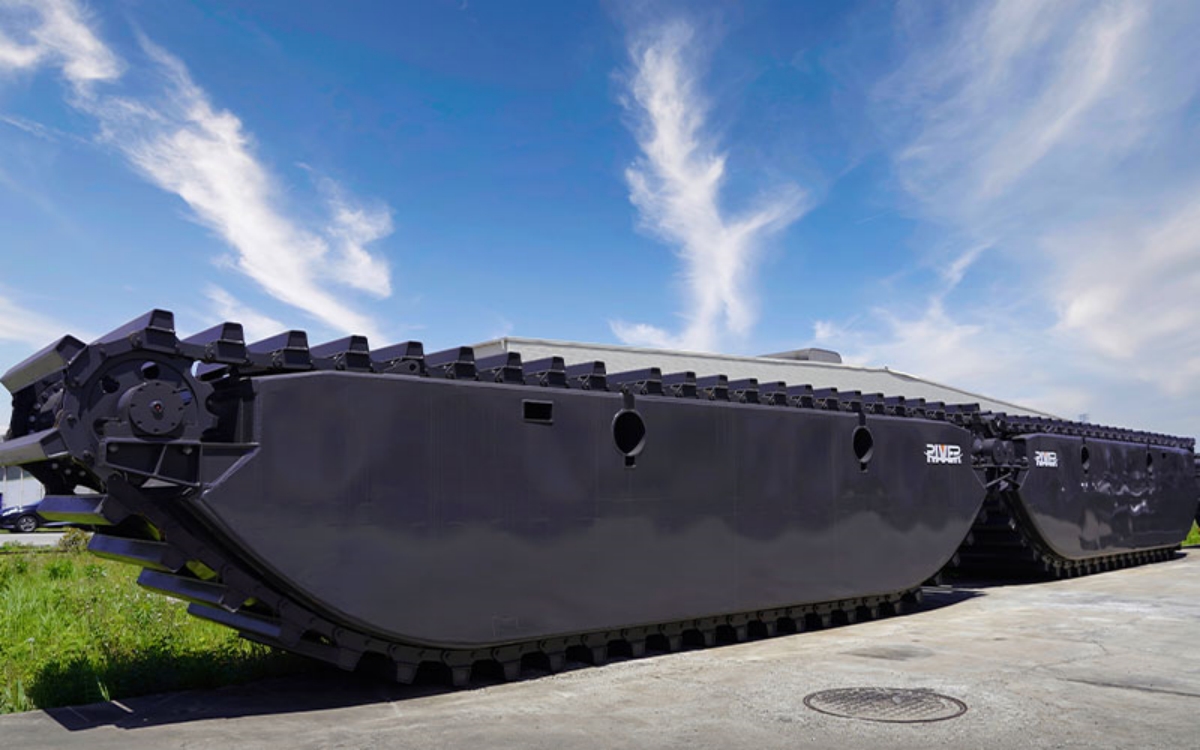
With its unique pontoon tracks, the amphibious excavator combines the stability of a conventional excavator on land with the ability to float and propel itself in water. Whether navigating flood-affected areas, swampy zones, or muddy riverbanks, this machine provides “all-weather” operation, reaching sites where traditional machines cannot.
Advantage 2: Rapid Response, Enhancing Emergency Rescue Efficiency
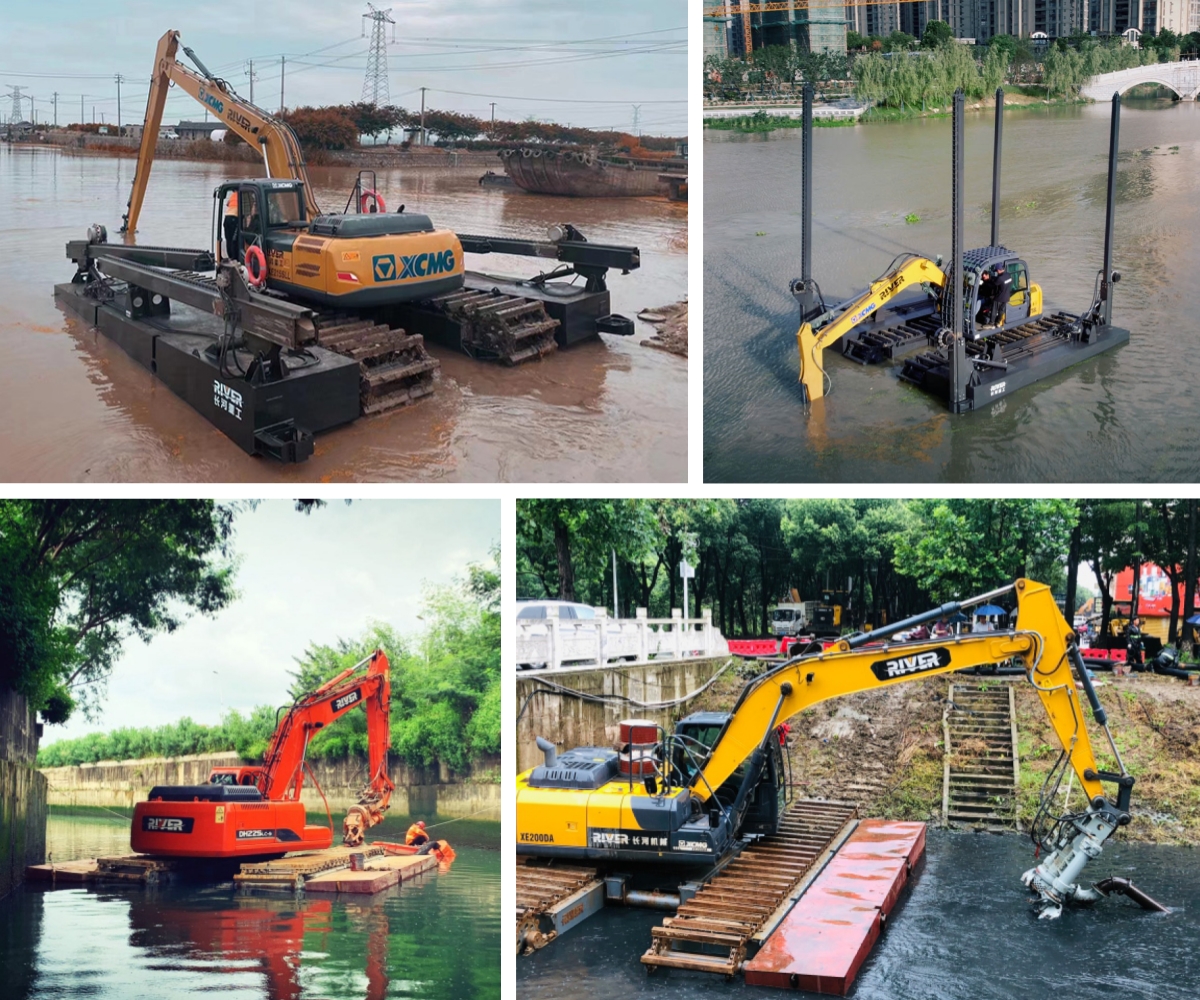
In flood response and emergency rescue operations, time is crucial. The amphibious excavator can enter water bodies directly, bypassing the need for waiting for water levels to recede or constructing temporary platforms. It can immediately perform essential tasks such as dredging blocked rivers, reinforcing embankments, and excavating diversion channels—making it an indispensable tool in crisis situations.
Advantage 3: Powerful Versatility, One Machine for Multiple Tasks
The amphibious excavator serves as a mobile platform capable of handling diverse tasks. With quick attachment changes (such as hydraulic breakers, dredging buckets, and vibratory hammers), it can tackle various functions like breaking obstacles, clearing silt, driving/extracting sheet piles, and assisting in post-disaster reconstruction. This flexibility maximizes equipment utilization and improves project economics.
Advantage 4: Protecting Soft Ground, Enabling Eco-Friendly Construction
On soft terrains like tidal flats and marshes, traditional heavy equipment risks sinking and damaging the environment. The amphibious excavator’s low ground pressure reduces surface impact, allowing it to work precisely without harming the soil structure or vegetation. This makes it ideal for wetland conservation and ecological restoration projects.
Advantage 5: Ensuring Safety, Minimizing Operational Risks
Rainy season construction is fraught with risks like slope collapses and equipment rollovers. The amphibious excavator’s low center of gravity and the buoyancy of its pontoons provide exceptional stability in water, significantly reducing rollover risks. Additionally, it allows operators to work safely from unstable slopes or hazardous water areas, ensuring safer construction operations.
Conclusion:
The amphibious excavator is not just a specialized tool for flood disaster management; it’s a strategic asset that ensures uninterrupted construction during the rainy season. With its five unmatched advantages, it’s rapidly becoming the preferred equipment for municipal engineering, water conservancy, emergency rescue, and environmental dredging in wet conditions and complex work environments. Choosing an amphibious excavator means choosing efficiency, safety, and peace of mind!