Introduction
In many dredging and river maintenance projects, contractors expect the main challenge to be sediment removal efficiency. However, in real working conditions, the real problem often appears before dredging even begins.
Submerged tree roots, dense vegetation, and long-term accumulated debris frequently block dredging pumps and cutter systems. Once the equipment enters the working area, unexpected clogging can occur repeatedly. This leads to downtime, reduced production efficiency, and higher maintenance pressure.
For contractors engaged in Dredging, river rehabilitation, and wetland projects, this issue directly affects project schedule and operational cost.
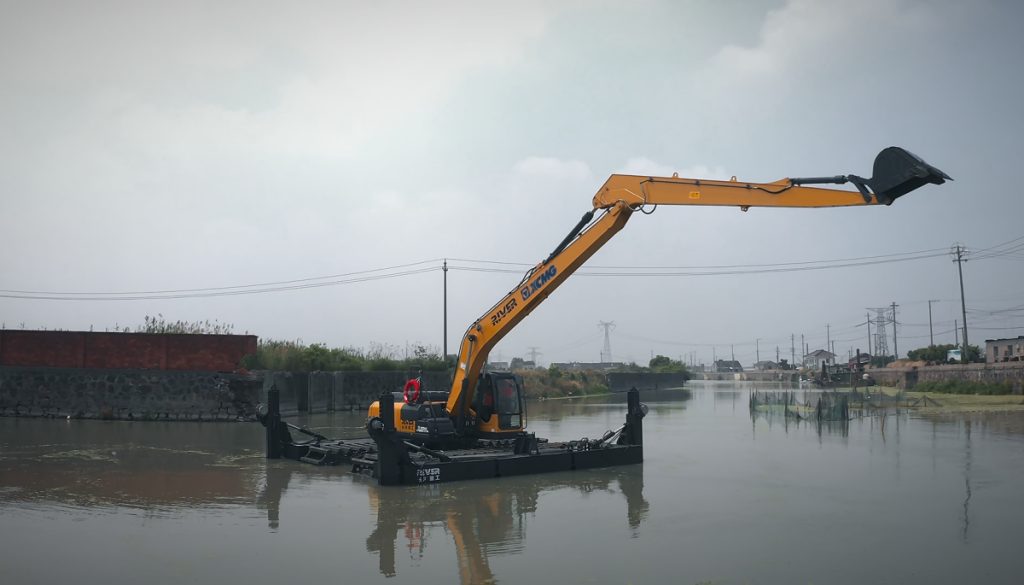
To solve this problem, RIVER offers a practical solution. It uses an Amphibious Excavator with an Extended Arm and a heavy-duty grapple for effective pre-cleaning work.
Problem: Underwater Tree Roots and Debris Causing Pump Blockage
In river dredging and lake cleaning projects, underwater conditions are often more complex than surface observation suggests.
Over time, natural growth and sediment accumulation create a hidden layer of obstacles, including:
- Thick tree root systems extending underwater
- Fallen branches and logs buried in mud
- Dense aquatic vegetation
- Floating and semi-submerged waste materials
These materials are difficult to detect before operations begin. Once dredging starts, suction systems easily draw them in, or cutter heads tangle them.
The result is predictable:
- Frequent dredge pump clogging
- Cutter head entanglement
- Reduced dredging efficiency
- Unplanned shutdown for cleaning
- Increased fuel and labor consumption
For contractors working under tight deadlines, these interruptions significantly impact project delivery.
Limitation: Conventional Excavators Cannot Solve the Root Cause
Many contractors attempt to rely on standard excavators stationed on riverbanks for pre-cleaning work.
However, conventional machines face clear operational limitations in real dredging environments:
First, reach is restricted. In wide rivers or deeper zones, the excavator cannot reach key working areas where debris concentrates.
Second, ground conditions are unstable. Soft soil, mud, and saturated banks reduce machine stability and increase operational risk.
Third, efficiency is limited. Repositioning the machine frequently slows down cleaning work and increases fuel consumption.
As a result, Tree Root Removal is often incomplete before dredging begins. The dredging equipment then inherits the problem instead of working in a prepared environment.
Solution: RIVER Amphibious Excavator with Extended Arm Grapple
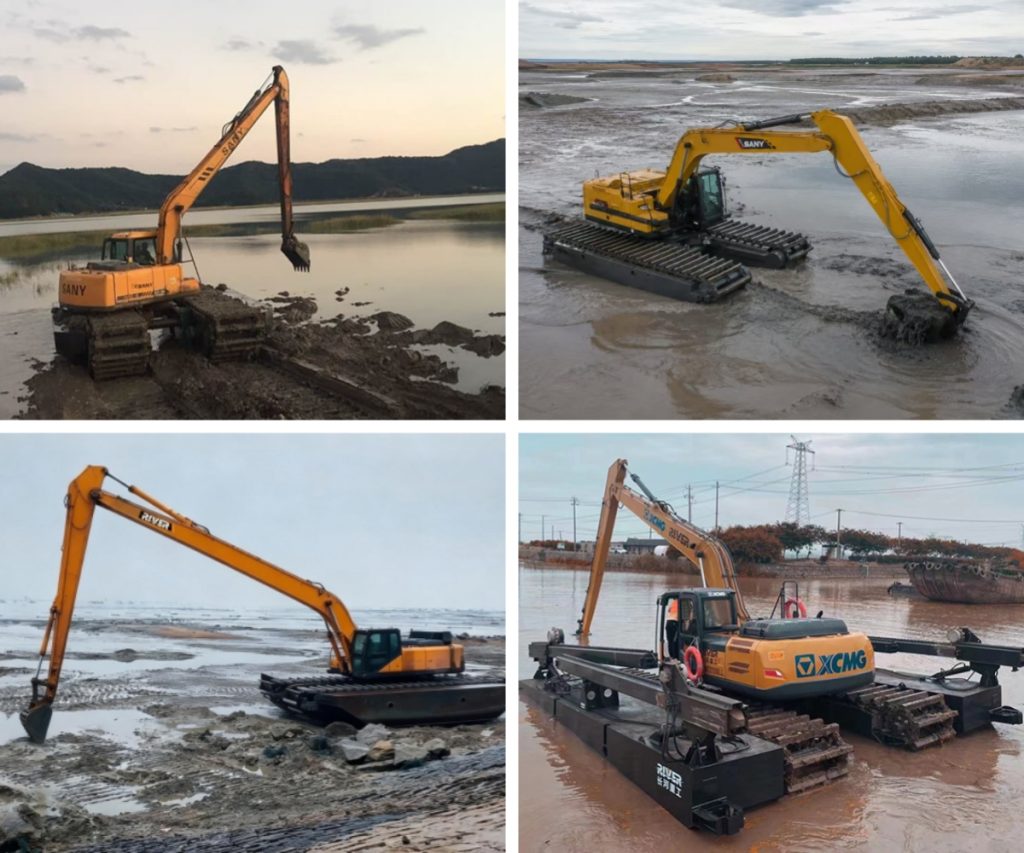
To address these challenges, RIVER combines its expertise in extended arm solutions. Engineers designed this configuration for wetlands, marshes, riverbanks, shallow water, and other soft-ground areas. It helps where conventional excavators cannot work safely or efficiently.
Amphibious Excavator Designed for Challenging Terrain
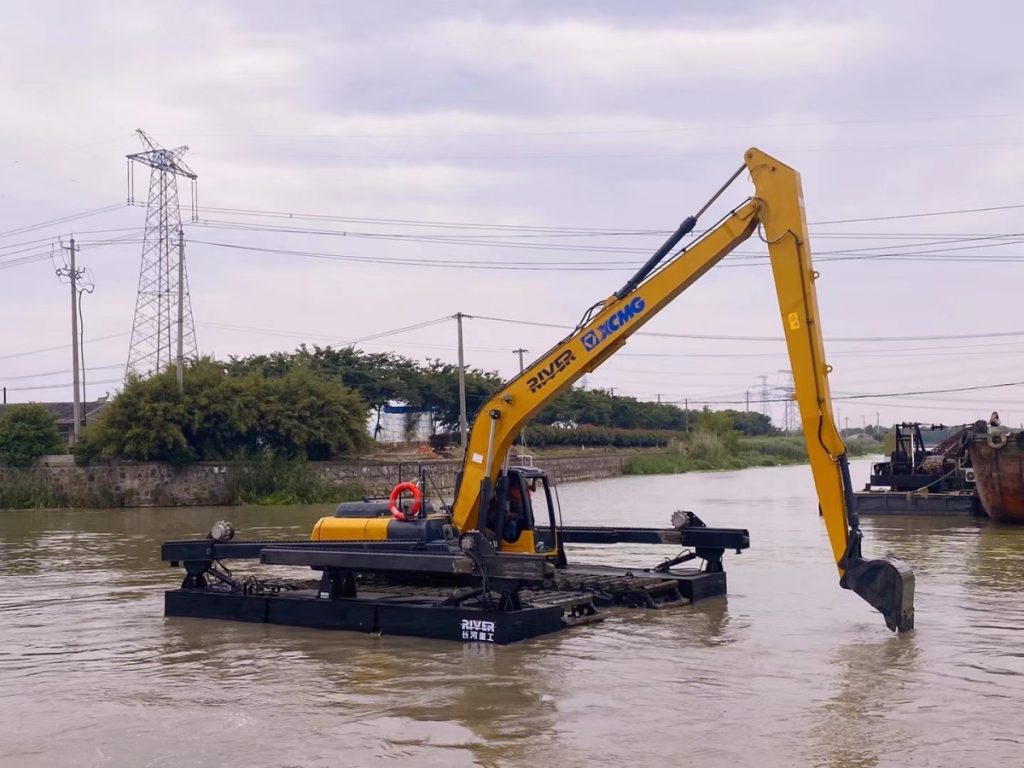
RIVER Amphibious Excavators feature a specially designed pontoon undercarriage that provides excellent flotation and low ground pressure. This allows the machine to travel and operate in muddy, swampy, and waterlogged areas without becoming stuck.
Compared with standard excavators, the amphibious chassis lets operators reach debris-filled areas directly. This reduces the need for temporary platforms or extra support equipment.
Extended Arm for Greater Reach and Working Depth
One of the key advantages of the RIVER solution is the integration of a customized Extended Arm system.
RIVER manufactures extended-arm options for many excavator sizes. These help contractors reach farther and dig deeper than standard setups.
For underwater debris removal, the Extended Arm provides several important benefits:
- Reach submerged obstacles located far from the shoreline
- Access deeper dredging zones without machine relocation
- Increase working coverage and productivity
- Reduce repositioning time and fuel consumption
- Improve safety when operating near unstable riverbanks
This wider working range is valuable in river dredging projects. Tree roots and debris are often beyond the reach of standard excavators.
Heavy-Duty Grapple for Tree Root Removal
The hydraulic grapple attachment is specifically selected for handling irregular underwater materials.
Unlike standard buckets made mainly for digging, the grapple can securely grip and lift hard-to-handle objects, such as:
- Large tree roots
- Submerged logs
- Branches and driftwood
- Dense vegetation masses
- Mixed underwater debris
The combination of precise hydraulic control and strong clamping force allows operators to remove obstacles efficiently while minimizing disturbance to surrounding sediment.
Results: Improved Efficiency and Reduced Downtime
After implementing the RIVER solution, contractors typically experience measurable operational improvements.
Reduced Pump Clogging
By removing underwater obstructions in advance, the dredging system operates with fewer interruptions and lower risk of blockage.
Higher Dredging Efficiency
With a cleared working area, suction and cutting systems can maintain stable production output over longer operating cycles.
Lower Maintenance Pressure
Less debris entering pumps and mechanical systems leads to reduced wear and fewer emergency repairs.
Better Project Continuity
Pre-cleaning allows dredging operations to proceed smoothly, minimizing unplanned shutdowns and improving schedule reliability.
Overall, the Amphibious Excavator is not only a dredging support machine. A key factor in efficient project preparation is also.
Application: River, Lake, and Wetland Projects
Although this solution is often used in dredging preparation, its application scope is broader.
In River Dredging, crews use it to clear navigation channels and remove submerged obstacles before large-scale excavation begins.
In lake maintenance, it helps remove tree roots and vegetation that build up over time. It improves water flow and dredging performance.
In wetland areas, where the soil is extremely soft, the amphibious excavator can operate safely. It can also remove debris with precision.
Across all scenarios, the combination of Amphibious Excavator, Extended Arm, and grapple attachment provides a flexible and reliable working method.
Conclusion
Dredging projects often overlook underwater tree roots and debris. Yet they are a main cause of pump clogs and delays.
Instead of treating blockages after they occur, a preventive approach is more efficient.
The RIVER Amphibious Excavator with an extended arm and grapple attachment is an effective solution. It supports tree root removal and underwater debris clearance. By preparing the work site before dredging begins, contractors can reduce downtime, improve efficiency, and keep projects on track.
For modern dredging contractors, site preparation is no longer optional—it is a key part of operational success.