1.Introduction
Flooding isn’t just a seasonal nuisance—it’s a growing threat to communities, farmland, and infrastructure. For river authorities and civil contractors, the real challenge isn’t the water itself. What happens before the flood is sediment choking the channel and embankments too weak to hold back the surge.
This article walks through a real-world flood control operation using the RIVER Amphibious Excavator. Two urgent missions were on the line:
- River dredging– to reopen clogged waterways and restore flow capacity
- Embankment reinforcement– to stop erosion and prevent levee failure
The takeaway? Specialized equipment can solve problems that standard machines can’t handle. This is vital when time is short and access is limited.
2.How the RIVER Amphibious Excavator Transforms Flood Control
Site Conditions & Real-World Hurdles
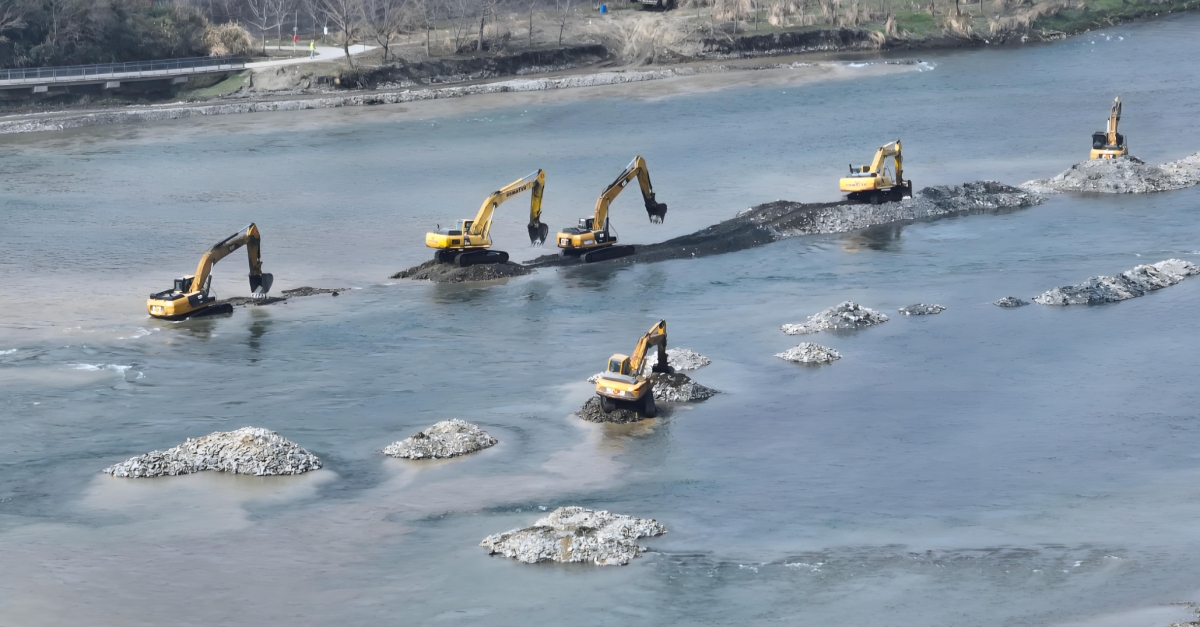
The project site was a textbook trouble zone: a heavily silted river channel with water depths ranging from 1.2 to 2.5 meters. The banks were soft, muddy, and unstable. Standard excavators couldn’t get close enough to work safely. Meanwhile, the adjacent embankment was showing clear signs of weakness—immediate structural support was mandatory.
Two clear goals emerged:
- Remove deposited sediment from the channel
- Place riprap and geotextile along vulnerable slope sections
Why Regular Excavators Just Don’t Cut It
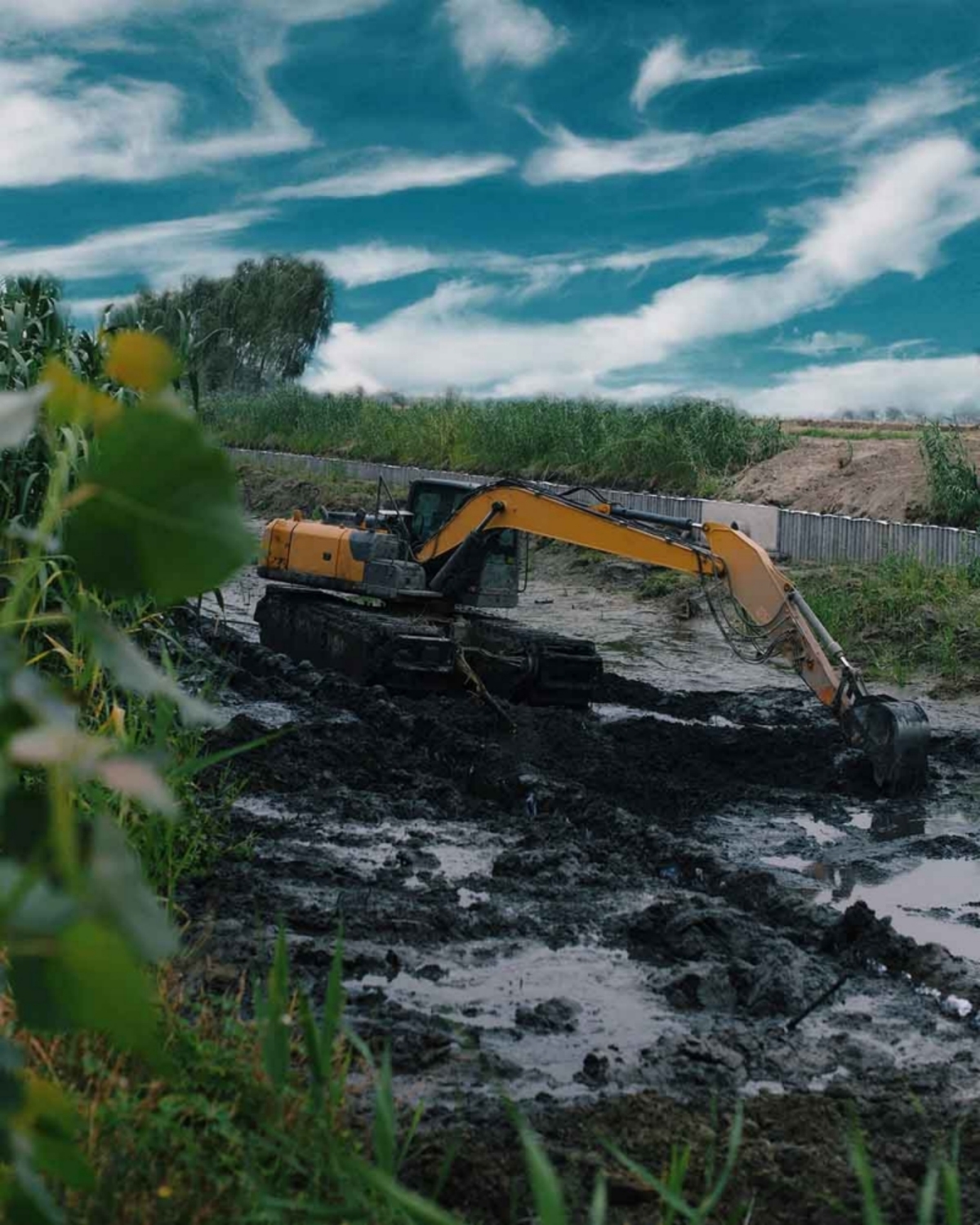
Conventional tracked excavators are land animals. They can’t wade into water. Working from the bank means limited reach and constant stability issues. On soft ground, they sink, tilt, or get stuck—sometimes within minutes.
Using barges? That adds heavy costs, complex logistics, and delays. For urgent flood control, those traditional methods are too slow, too expensive, and often impractical.
The Amphibious Answer
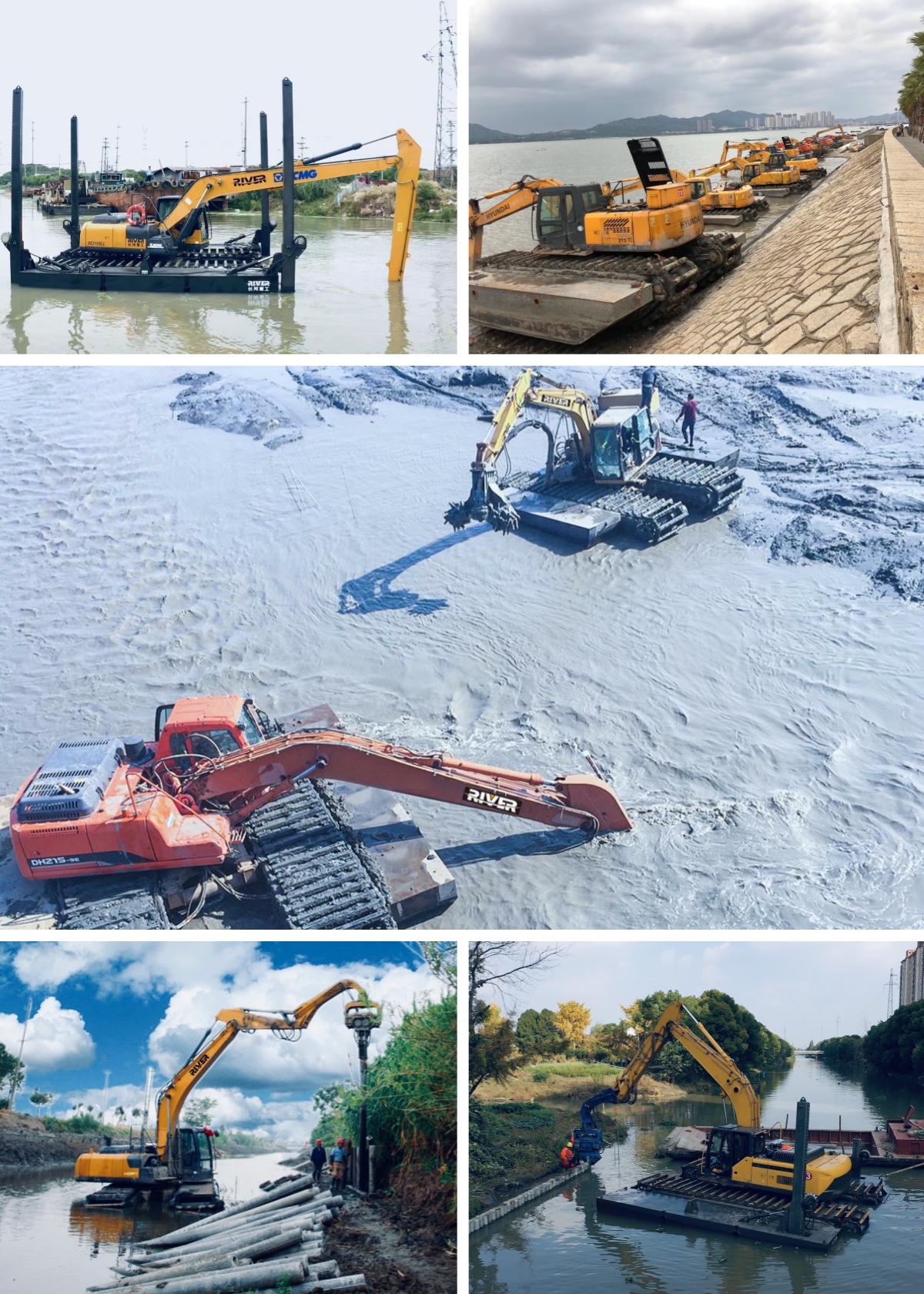
That’s why the contractor chose the RIVER Amphibious Excavator. Sealed pontoons give it buoyancy.
A powerful travel drive lets it crawl through mud, swim through open water, and transition between both without missing a beat. No support barges. No temporary causeways.
For dredging: The machine wades directly into the channel and scoops silt from the water. No long-reach compromises—it works where the sediment sits, restoring flow capacity faster than any bank-based option.
For embankment reinforcement: The amphibious excavator places geotextile fabric and stone armor with surgical precision along the waterline. Thanks to its stable footprint on submerged soil, operators complete slope protection without any marine support vessels.
Measurable Wins & Efficiency Gains
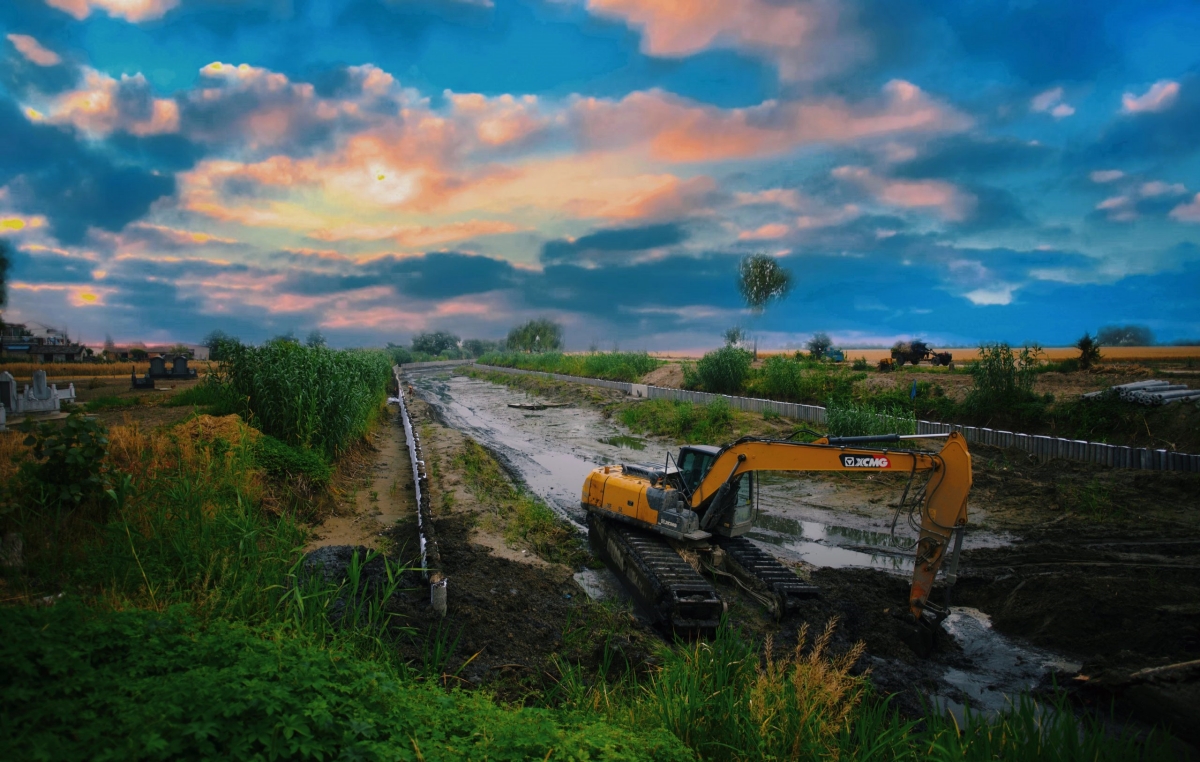
Once the RIVER unit was deployed, the numbers spoke for themselves:
- Dredging productivity jumped by over 40% compared to earlier bank–only methods
- The embankment reinforcement phase finished ahead of the rainy season deadline
- Zero temporary causeways or floating platforms needed
- One machine handling both tasks cut labor requirements and total flood control costs significantly
3.Beyond Flood Control: Other Smart Applications
The RIVER Amphibious Excavator isn’t a one–trick machine. It thrives in any wet environment where conventional equipment fears to tread.
Lake & reservoir maintenance – Removing silt and aquatic vegetation helps preserve storage capacity for flood mitigation and water supply.
Marsh & wetland restoration – Low ground pressure prevents ecological damage, while still allowing channel clearing and small embankment repairs.
Coastal dredging – Work in tidal zones to remove built-up sand. It keeps waterways open for boats. It also supports flood control and local maritime activity.
Every site has unique demands. That’s why RIVER offers custom configurations—including pontoon dimensions, telescopic arm lengths, and specialized attachments for sediment handling. Tailored solutions mean higher safety and better efficiency, no matter the dredging or embankment task.
4.Conclusion
Flood control isn’t about theory. Having equipment that can actually reach the problem and fix it—fast—is what it’s about.
The RIVER Amphibious Excavator fills the critical gap left by land–based machines. By giving operators direct access to waterways and soft shorelines, it helps projects move faster. It also builds stronger, more stable levees.
For river management authorities, civil contractors, and disaster preparedness teams, this isn’t just another machine. A strategic investment in reliable, year–round flood defense. When the water rises, you need gear that rises to the occasion—and the RIVER does exactly that.