
Introduction
In river dredging and waterway maintenance projects, maintaining excavator stability is one of the most important factors affecting productivity and safety. Soft riverbeds, thick silt deposits, and water depths of 5–6 meters often create challenging working conditions for contractors.
A recent river dredging project demonstrated how hydraulic spud poles can significantly improve the performance of an amphibious excavator. By equipping a SANY excavator with a customized amphibious undercarriage featuring hydraulic spud poles, the contractor achieved higher excavation efficiency, improved machine control, and enhanced operational safety compared to a conventional floating undercarriage.
This article explains why spud poles have become an increasingly valuable solution for river dredging projects and compares their performance with standard amphibious excavator undercarriages.
Customized Amphibious Excavator Solution for River Dredging Projects
Project Conditions
The project involved river dredging in an area with thick layers of accumulated silt. The water depth ranged from 5 to 6 meters, requiring continuous excavation over an extended period.
Under these conditions, the excavator must maintain a stable working position while generating sufficient digging force to remove compacted sediment efficiently. Any excessive movement of the machine can reduce productivity and increase operational risks.
Limitations of a Standard Amphibious Undercarriage
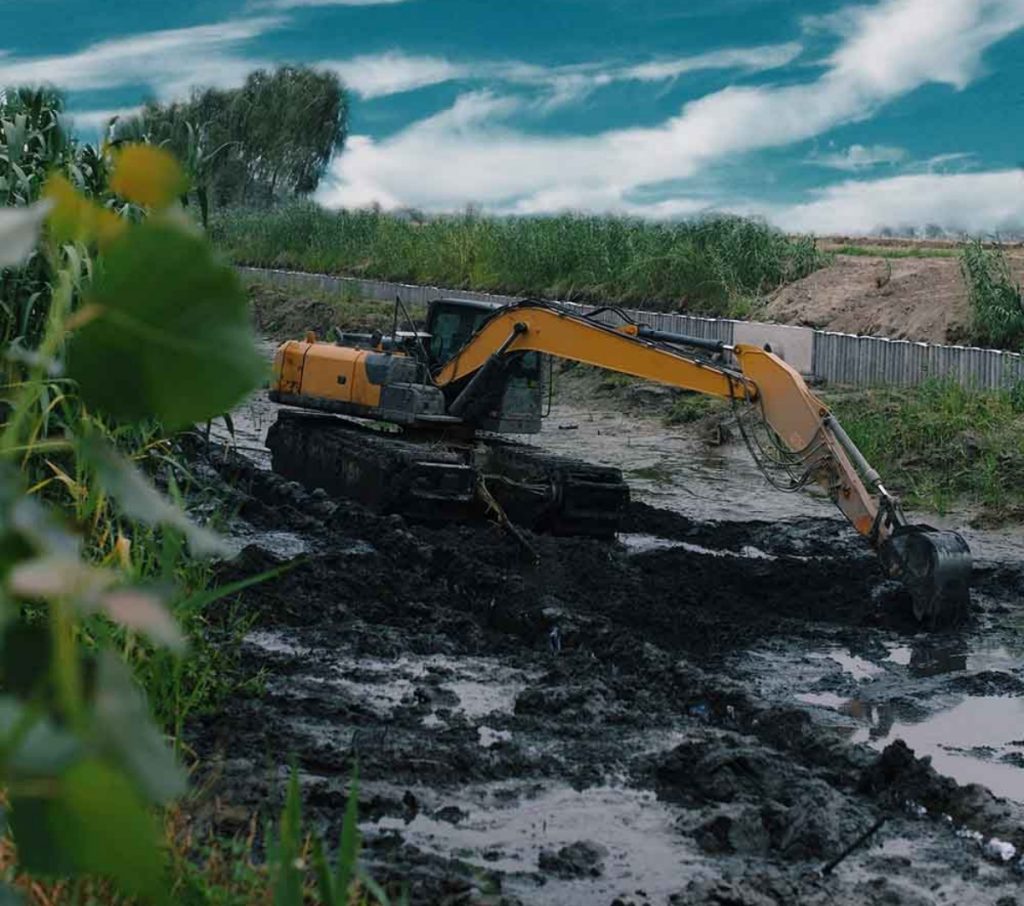
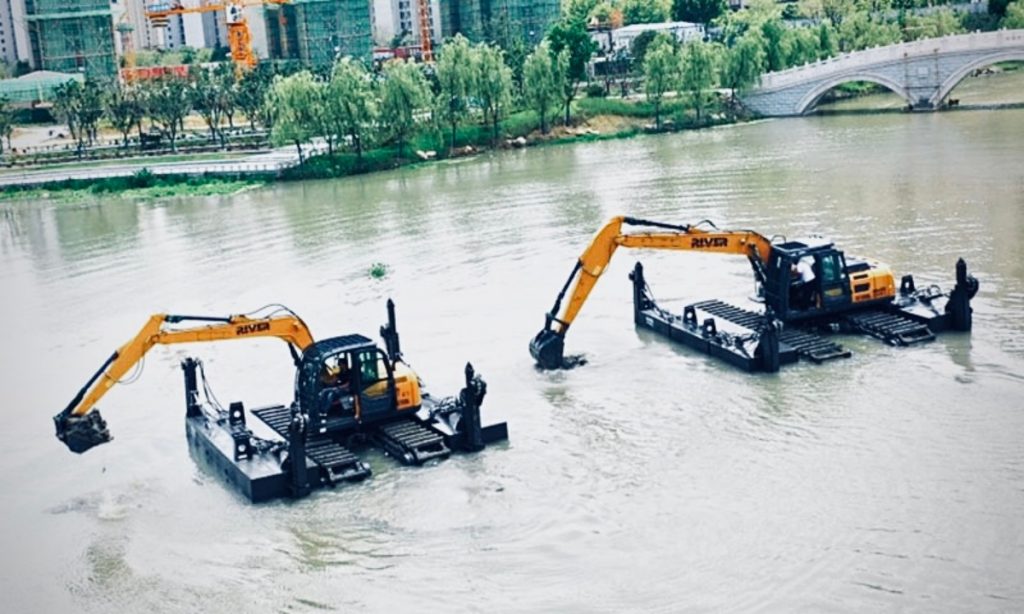
A standard amphibious excavator relies primarily on its pontoons for flotation and mobility. While this design provides excellent mobility in wetlands, swamps, and shallow water, stability can become a challenge during intensive excavation operations.
When the bucket penetrates thick sediment and applies digging force, the machine may experience:
- Side-to-side movement
- Forward and backward rocking
- Reduced digging accuracy
- Lower excavation efficiency
- Increased risk of sinking into soft riverbeds
As the bucket fills with heavy material, the shifting load can further affect machine balance. Operators often need to make frequent corrections, which reduces overall productivity.
Customized Solution: Hydraulic Spud Pole System
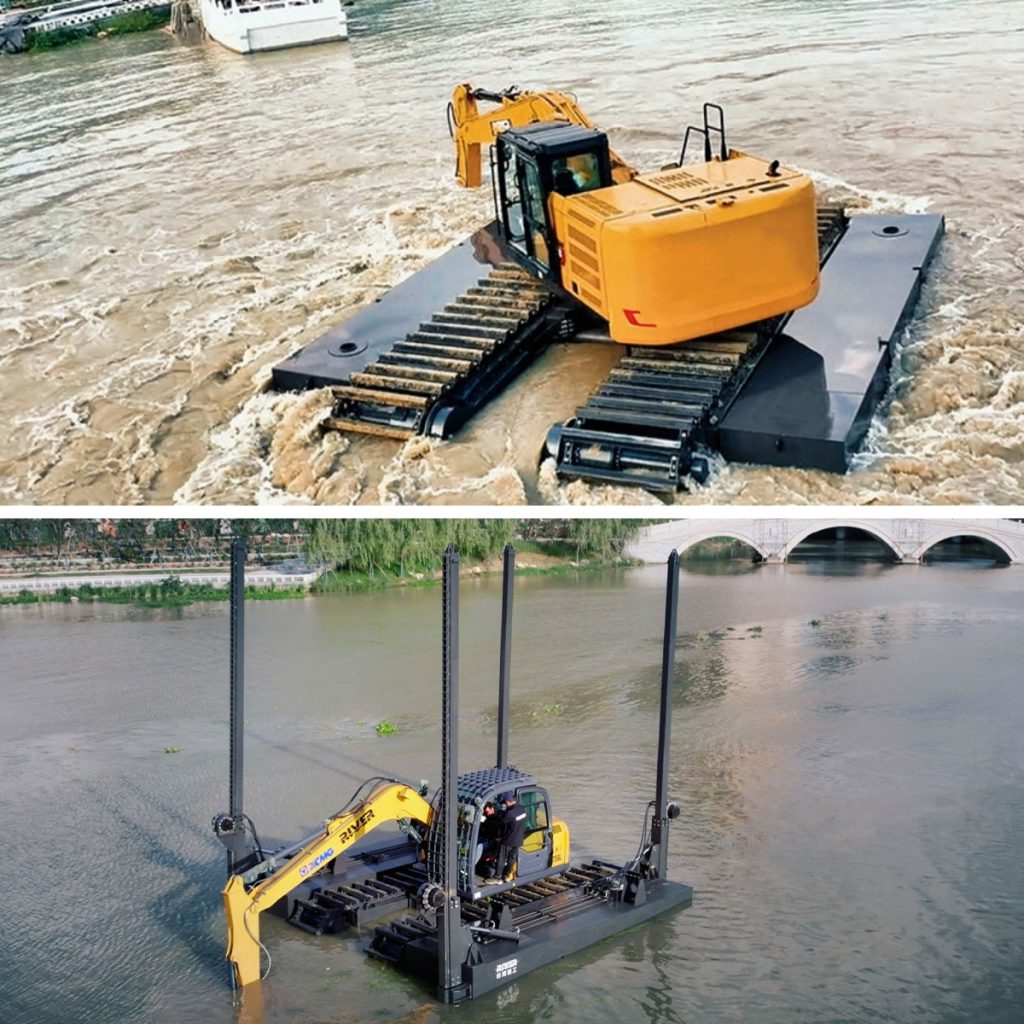
To address these challenges, RIVER designed a customized amphibious undercarriage equipped with hydraulic spud poles.
The hydraulic spud poles are installed on the rear of the undercarriage and can be lowered directly into the riverbed. Once deployed, they act as temporary anchors, securing the machine in position during excavation.
This solution transforms the amphibious excavator from a floating platform into a highly stable working system.
Key features include:
- Hydraulic lifting and lowering
- Strong anchoring capability
- Enhanced machine positioning
- Improved operational safety
- Greater resistance to movement caused by digging forces
After the SANY excavator was equipped with the hydraulic spud pole system, operators reported noticeably smoother operation and improved control throughout the dredging process.
Hydraulic Spud Poles vs Standard Amphibious Undercarriages
The following comparison highlights the advantages of using hydraulic spud poles in river dredging applications.
| Comparison Item | Standard Amphibious Undercarriage | Amphibious Undercarriage with Spud Poles |
| Machine Stability | Moderate | Excellent |
| Digging Accuracy | Average | High |
| Operator Control | Limited in deep water | Precise and stable |
| Excavation Efficiency | Lower | Significantly higher |
| Safety Performance | Moderate | Enhanced |
| Resistance to Bucket Force | Limited | Strong |
| Suitability for 5–6m Water Depth | Acceptable | Highly Recommended |
Improved Stability
The most significant advantage of spud poles is improved stability.
By anchoring the machine to the riverbed, the excavator remains firmly positioned even when handling heavy loads. The operator can focus on excavation instead of constantly correcting machine movement.
Higher Excavation Efficiency
Stable positioning allows the excavator to transfer more hydraulic power directly into the digging process.
Instead of losing energy through machine movement and repositioning, the excavator can maintain a consistent digging cycle. This results in faster material removal and improved productivity.
Enhanced Safety
Safety is another critical benefit.
In deep water and soft sediment conditions, machine instability can increase operational risks. Hydraulic spud poles provide additional support and reduce the likelihood of excessive movement or unexpected sinking.
For contractors working in river dredging projects, this added safety margin can significantly reduce downtime and project risks.
Conclusion
For river dredging projects with water depths of 5–6 meters and thick sediment layers, machine stability directly affects productivity, safety, and project costs.
While a conventional amphibious excavator can operate in these environments, its floating design may limit excavation efficiency when working under demanding conditions.
By integrating hydraulic spud poles into a customized amphibious undercarriage, RIVER provides a practical solution that significantly improves stability and operational performance. Combined with the reliability and power of a SANY excavator, the system enables contractors to achieve more precise, efficient, and safer dredging operations.
As river maintenance and dredging projects continue to demand higher productivity, hydraulic spud poles are becoming an essential component for modern amphibious excavator applications.